
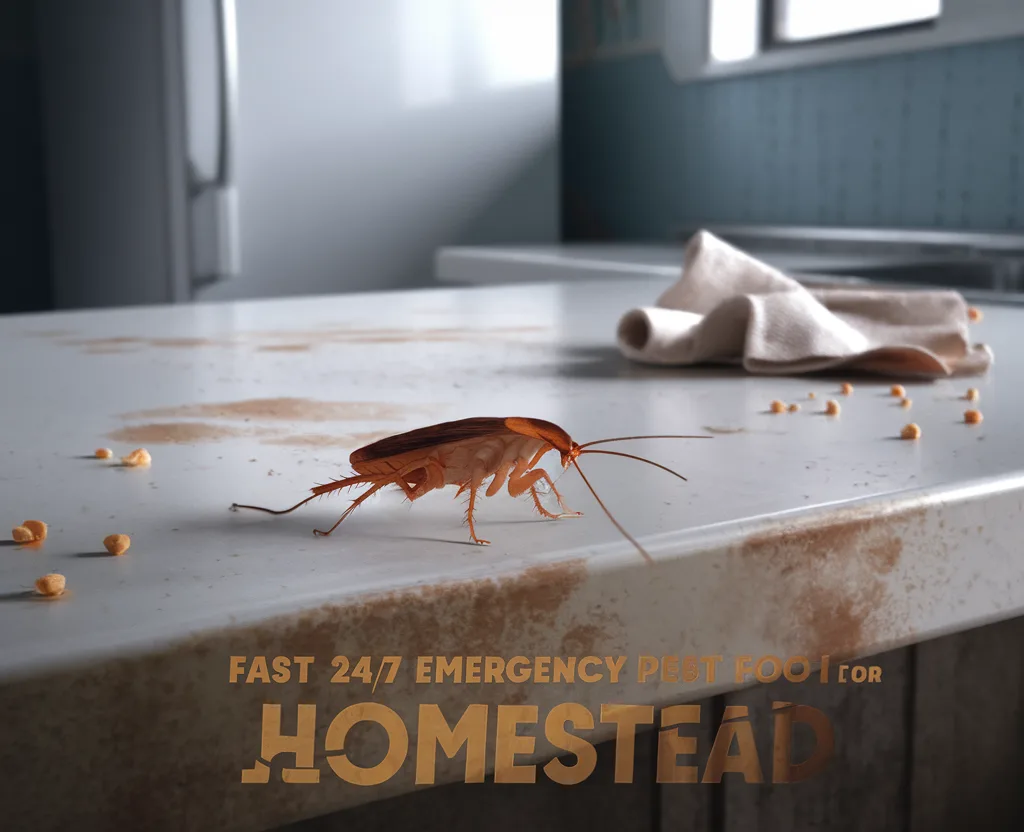
Picture this: It’s 2 a.m. on a Tuesday, and you’re lying in bed, trying to convince yourself that the scratching sound coming from inside your walls is just the house settling. But deep down, you know better. Or maybe you’ve just walked into your kitchen, coffee mug in hand, only to freeze mid-step as you watch a seemingly endless line of ants marching across your counter like they own the place. Perhaps it happened as you pulled into your driveway after a long day—that split-second glimpse of something dark and furry scurrying across your yard that made your stomach drop.
Here’s the thing about pest emergencies: they never arrive at convenient times. They don’t wait until Monday morning when you’re already planning your weekly errands. They don’t politely announce themselves during business hours. Instead, they show up in the middle of the night, on holiday weekends, or right when you’re hosting family from out of town. And if you’re a homeowner here in Homestead or anywhere else in southern Miami-Dade County, you already know that our warm, humid climate means these unwelcome visitors are active year-round, making true 24/7 emergency pest control not just a luxury, but an absolute necessity.
Why Homestead Faces Unique Pest Pressures
Living in Homestead comes with incredible perks. You’re part of a tight-knit community with rich agricultural roots, you’ve got easy access to both the Everglades and the Florida Keys, and let’s be honest, the weather is pretty fantastic most of the year. But that same subtropical climate that lets you enjoy outdoor barbecues in January? It also creates a paradise for pests.
Unlike homeowners up north who get a blessed break from pest activity when winter arrives, you don’t have that luxury. There’s no hard freeze here to knock back mosquito populations, no sustained cold snap to send roaches into dormancy. Instead, Homestead experiences continuous warmth and humidity throughout all twelve months, which means pests are breeding, feeding, and actively searching for ways into your home every single day of the year.
What makes Homestead particularly challenging is its agricultural heritage. Don’t get me wrong—those farms, nurseries, and rural properties are part of what makes this area special. But they also provide abundant breeding grounds for pest populations. When conditions shift—maybe due to farming activities, a heavy rain, or habitat disruption from new development—these established pest colonies don’t just disappear. They migrate. And often, they migrate straight toward residential neighborhoods like yours, searching for three basic necessities: food, water, and shelter.
Your Home’s Unique Vulnerabilities
Walk through any Homestead neighborhood, from the historic homes near downtown to the newer developments in Naranja and Silver Palm, and you’ll notice something interesting: incredible diversity in housing styles and ages. That diversity, while adding character to our community, also means each home presents its own unique vulnerabilities to pest invasions.
If you’re living in one of Homestead’s older homes—those charming properties with history and personality—you might be dealing with aging foundations where small gaps have developed over decades. Maybe your crawl space isn’t quite as sealed as it should be, or your wooden structures have developed the kind of vulnerabilities that termites and carpenter ants find irresistible. Older plumbing can create moisture issues that attract pests like a magnet, and that beautiful, mature landscaping? It provides perfect harborage for rodents and insects.
Newer homes aren’t immune either. During construction, soil disturbance displaces existing pest populations, and guess where they go? Fresh landscaping with new mulch and automatic irrigation systems creates ideal conditions for ant colonies and other pests. Even if your home was built to modern codes, proximity to undeveloped lots or agricultural areas means you’re constantly facing pressure from pest populations looking for new territory.
The homes still recovering and rebuilding after Hurricane Andrew face their own challenges—construction gaps, temporary repairs that have become permanent, and modifications made over the years that may have inadvertently created pest entry points.
When Pest Problems Become Emergencies
Not every pest sighting qualifies as an emergency. Spotting a single ant on your patio? Annoying, sure, but not urgent. But some situations cross the line from minor nuisance to genuine emergency, demanding immediate professional attention regardless of what time the clock shows.
The Midnight Wake-Up Call: Rodents
There’s something uniquely unsettling about hearing scratching sounds inside your walls at night. Maybe you try to ignore it at first, pulling the covers up and telling yourself it’s nothing. But the sound continues—scratching, scurrying, sometimes even squeaking. That’s when the reality hits: you have rodents living inside your home.
Rats and mice aren’t just creepy. They’re genuinely dangerous. These rodents carry diseases like hantavirus, leptospirosis, and salmonella that can seriously threaten your family’s health. Their droppings become airborne when disturbed during cleaning, potentially contaminating the air you breathe. And here’s something that keeps many homeowners up at night: rodents need to gnaw constantly to keep their ever-growing teeth manageable, which means they’re actively chewing through whatever’s available—including the electrical wiring in your walls, creating very real fire hazards.
In Homestead’s agricultural surroundings, roof rats are particularly common. These agile climbers access homes through tree branches that touch your roofline, utility lines leading into the structure, and surprisingly small openings around vents and eaves. If you’re hearing scratching sounds at night, discovering droppings in your cabinets, finding gnaw marks on food packaging, or noticing your pets acting strangely—staring intently at walls or scratching at specific areas—you’re likely dealing with an active rodent infestation that needs immediate attention.
The Discovery Nobody Wants: Bed Bugs
Few pest discoveries create more immediate panic than finding bed bugs. These tiny, blood-feeding parasites are roughly the size of an apple seed, but the psychological impact they have is enormous. The thought of these creatures feeding on you while you sleep is disturbing enough, but the reality that they spread rapidly from room to room and require specialized treatment makes this a true emergency.
What many Homestead homeowners don’t realize is that bed bugs have nothing to do with cleanliness. They’re expert hitchhikers that travel home with you from hotels, movie theaters, schools, or even public transportation. Once established in your home, their populations grow exponentially. A single female bed bug can lay up to 500 eggs during her lifetime, and without professional intervention, a minor problem becomes a major infestation within weeks.
The Dangerous Nest: Stinging Insects
Walking outside to grab your mail and suddenly finding yourself face-to-face with a wasp nest built overnight near your front door? That’s an emergency. Wasps, hornets, and aggressive bee colonies near entryways, play areas, or frequently used outdoor spaces create immediate physical danger, especially for families with children or anyone with allergies.
While northern states see stinging insect activity decline in fall and winter, Homestead’s warm climate means these insects remain active year-round. They can establish large, defensive colonies remarkably quickly, and unlike honeybees that sting once, wasps and hornets can sting multiple times when they feel threatened. A nest near your home isn’t just inconvenient—it’s a safety hazard that demands immediate professional removal.
The Silent Destroyers: Termites
Discovering a termite swarm inside your home—hundreds of winged insects suddenly appearing near windows or light fixtures—signals that somewhere in your structure, an established colony has been quietly consuming wood for months or even years. These swarms typically occur after rain, and given Homestead’s frequent summer thunderstorms, termite swarms are disturbingly common.
Here’s what that swarm means: the colony has grown large enough that it’s producing reproductive termites to establish new colonies. In other words, significant damage has already occurred, and the problem is actively spreading. While termites work slowly compared to the rapid invasion of rodents, a swarm indicates the infestation has progressed well beyond early stages and requires immediate professional assessment and treatment.
The Overwhelming Invasion: Ants
Some ant activity is just part of life in South Florida. But certain situations absolutely qualify as emergencies. Fire ant colonies near your walkways or children’s play areas pose serious stinging hazards. These aggressive ants defend their colonies fiercely, and their stings create painful, itchy pustules that can trigger allergic reactions in sensitive individuals.
Carpenter ants—those large black ants you might spot occasionally—indicate potential structural damage. Unlike termites that eat wood, carpenter ants excavate it to create nesting galleries, weakening structural components over time. And then there are the ant species that Homestead homeowners know all too well: ghost ants and crazy ants, both of which can suddenly appear in overwhelming numbers, contaminating food preparation areas and creating genuinely unsanitary conditions in your kitchen.
The Real Cost of Waiting Until Morning
When you discover pests at 11 p.m. or 3 a.m., there’s often that moment of deliberation: Do I really need to call someone right now, or can this wait until morning? It’s a fair question, and understanding what happens during those waiting hours helps clarify why immediate response truly matters.
Let’s talk about health first. Every hour that rodents remain active in your home increases your family’s exposure to disease. Those droppings accumulating in your walls and attic? They’re contaminating your home’s air. Cockroaches—which can appear suddenly in large numbers in Homestead’s warm climate—trigger asthma and allergies, particularly in children. Their populations can literally double within days under ideal conditions, and let’s face it: your home’s warm, humid interior provides those ideal conditions.
Then there’s the property damage that continues accumulating while you wait. Termites don’t take nights off. An established colony consumes approximately one pound of wood every single day, working around the clock. Rodents must gnaw continuously, and they’re not selective about what they chew—wiring, insulation, structural components, family heirlooms stored in the attic—it’s all fair game. Carpenter ants excavate galleries in structural wood throughout the night, steadily weakening the very framework of your home.
The population growth factor is perhaps most alarming. Most pest species reproduce at rates that seem almost impossible. That single German cockroach you spotted scurrying across your bathroom floor? She can produce over 30,000 offspring in just one year. Mice reach sexual maturity in merely six weeks and can produce up to ten litters annually, with each litter containing six to eight babies. Every day you wait, the population grows, making eventual elimination exponentially more difficult, time-consuming, and expensive.
But there’s also the emotional and psychological toll that doesn’t show up on any invoice. The sleep disruption when you’re lying awake listening to rodent activity overhead. The anxiety about whether your children are safe sleeping in their rooms. The embarrassment of canceling plans with friends because you can’t bear the thought of them discovering your pest problem. The general stress of knowing your personal space—your sanctuary—has been invaded. Quick professional response doesn’t just eliminate pests; it restores your peace of mind and sense of security in your own home.
What Real 24/7 Emergency Service Actually Means
Here’s something you should know: not all companies advertising emergency services actually provide genuine 24/7 availability. Some mean you can leave a message any time for a callback during business hours. Others route your emergency call to an answering service that schedules an appointment for the next available opening. That’s not emergency service—that’s just after-hours messaging.
True 24/7 emergency pest control means trained, licensed technicians are on-call and equipped to respond immediately at any hour. For Homestead residents, local availability matters enormously. A company based in northern Miami-Dade County might technically offer emergency service, but they’re facing a significant drive to reach you. When you’re dealing with a wasp nest threatening your family’s safety or rodents chewing through wiring in your walls, every minute counts.
Real emergency service also means comprehensive treatment, not temporary patches. Professional emergency technicians arrive with fully stocked vehicles containing the equipment, professional-grade products, and expertise needed to implement complete treatment immediately. Whether that involves setting up a comprehensive rodent trapping system with exclusion work to seal entry points, applying targeted insecticide treatments to eliminate ant colonies, or safely removing that threatening wasp nest, the goal is solving the problem that night—not just providing a band-aid that buys you a few days until a follow-up appointment.
And despite the urgency and odd hours, proper safety protocols remain non-negotiable. Professional emergency pest control means technicians follow all safety measures, use EPA-approved products appropriately, and protect your family and pets even during middle-of-the-night service calls. You’re inviting someone into your home at a vulnerable time; that technician should be licensed, experienced, and committed to doing the job right.
Protecting Your Home Before Emergencies Happen
While having access to 24/7 emergency service provides essential peace of mind, prevention remains your best defense. Homestead’s climate and geography mean you need year-round vigilance, but the good news is that many emergencies can be prevented with consistent, strategic effort.
Managing Moisture: Your First Line of Defense
Water drives pest activity more than almost any other factor. In Homestead’s naturally humid environment, managing moisture around and within your home makes a dramatic difference. That leaky faucet you’ve been meaning to fix? It’s creating a water source that attracts pests. Air conditioning condensation that’s not properly draining away from your foundation? You’re essentially inviting moisture-loving pests to set up residence.
Walk around your property after a heavy rain and observe where water accumulates. Does it pool near your foundation? Those areas need improved drainage. Are your gutters overflowing instead of channeling water away from your home? Clean gutters aren’t just about protecting your roof—they’re about pest prevention. Any roof leaks need immediate attention, particularly given Homestead’s intense summer thunderstorms that can quickly turn a small leak into a major moisture problem.
Sealing Entry Points: Exclusion Works
Pests are remarkably resourceful at finding ways inside. Mice can squeeze through openings the size of a dime. Rats need only a quarter-sized gap. Insects can slip through cracks you’d never notice. Regular inspection and sealing of potential entry points prevents countless pest invasions before they start.
Check your foundation for cracks and gaps, especially around utility penetrations where pipes, wires, and cables enter your home. Install or repair door sweeps on all exterior doors—that gap beneath your back door might seem insignificant, but it’s a highway for insects and rodents. Ensure window screens are intact without tears or gaps. Cap chimneys and vent openings with appropriate mesh that allows airflow while blocking pest access. And trim tree branches and vegetation away from your roofline and exterior walls; those beautiful shade trees can become bridges for roof rats to access your home.
Sanitation: Eliminating the Welcome Mat
Pests need food to survive, and your home likely offers more food sources than you realize. Stored pantry items in cardboard boxes or bags? Pests will chew right through. Pet food left in open bags or bowls overnight? That’s an invitation. Crumbs and spills that don’t get cleaned promptly? Pests will find them.
Transfer pantry items to sealed containers—yes, it takes time initially, but it prevents infestations. Clean up spills and crumbs promptly rather than letting them sit overnight. Take garbage out regularly and use outdoor containers with tight-fitting lids. If you have pets, establish a feeding schedule rather than leaving food out continuously, and store pet food in sealed containers. Reduce clutter in storage areas, especially in garages and sheds, where cardboard boxes and stored items create perfect pest hiding spots.
Landscape Management: Your Yard’s Role
Your property’s landscape creates either a barrier or a pathway for pests. That lush vegetation touching your home’s exterior? It provides perfect pest harborage and creates moisture against your foundation. Mulch piled thick against your foundation? It’s like rolling out a welcome mat for termites, ants, and other pests.
Maintain a vegetation-free zone of at least 12 inches around your foundation—think of it as a pest barrier. If you have citrus or fruit trees (common in Homestead), remove fallen fruit promptly before it attracts pests. Manage irrigation carefully to avoid creating standing water, and keep mulch at reasonable levels pulled back from direct foundation contact. Remove yard debris, leaf piles, and unnecessary items that create pest harborage.
Recognizing When DIY Isn’t Enough
There’s no shame in trying to handle minor pest problems yourself initially. Store-bought products have their place for small, isolated incidents. But here’s what many homeowners don’t realize: those consumer products are formulated at significantly lower concentrations than professional-grade materials. They lack the targeted application expertise that makes treatment truly effective. And most importantly, if you’re seeing repeated pest activity despite your DIY efforts, you’re likely dealing with an established infestation that requires professional solutions.
Certain situations always warrant immediate professional help: multiple pest sightings, especially during daytime hours (nocturnal pests appearing in daylight indicates population pressure from high numbers); evidence of nesting or breeding like rodent nests in insulation, cockroach egg cases behind appliances, or termite mud tubes on your foundation; any structural damage including gnaw marks or wood damage; bites or stings affecting family members; pests in food storage or preparation areas creating immediate contamination concerns; or failed DIY treatment attempts indicating the problem exceeds over-the-counter solution capabilities.
How Professional Emergency Treatment Works
Understanding what happens when you call for emergency service helps you know what to expect and why professional treatment achieves results that DIY methods cannot.
Even in emergency situations at 2 a.m., effective treatment begins with proper assessment. When experienced technicians arrive at your Homestead home, they conduct a comprehensive inspection to identify the specific pest species (treatment for roof rats differs from treatment for Norway rats; ghost ants require different approaches than carpenter ants), locate entry points and harborage areas, assess the infestation extent, and determine contributing factors like moisture problems or structural gaps.
This inspection informs the treatment strategy, ensuring solutions address root causes rather than just visible symptoms. Modern pest control has evolved far beyond simply spraying pesticides everywhere. Professional Integrated Pest Management combines mechanical controls including trapping and physical removal, exclusion by sealing entry points to prevent future invasions, habitat modification addressing moisture, food sources, and harborage, targeted pesticide application using appropriate products in precise locations, and monitoring with follow-up to ensure treatment effectiveness.
Professional technicians arrive with commercial-grade products and equipment unavailable to consumers—materials with higher active ingredient concentrations, specialized formulations for specific pests and situations, professional application equipment for precise placement, and monitoring devices for tracking activity and treatment effectiveness. You’re also getting documentation of findings, treatments performed, and recommendations for preventing recurrence—valuable information for your records and for maintaining a pest-free environment going forward.
Finding Emergency Pest Control You Can Trust
When you’re facing a pest emergency at 3 a.m., you need confidence that the service you call will deliver effective, professional results. Local knowledge makes an enormous difference. Homestead’s pest pressures differ from those in Coral Gables, Pinecrest, or even nearby Cutler Bay. A company with specific Homestead experience understands local pest species, knows which treatment approaches work best in this climate, and is familiar with construction types and landscaping common to the area.
Verify that any emergency service provider holds current Florida pest control licenses and carries appropriate insurance. This protects you legally and ensures technicians have met competency requirements. Reputable companies stand behind their work with service guarantees—understand what’s covered, how long the guarantee lasts, and what’s required to maintain it. Emergency service naturally costs more than scheduled appointments, but pricing should still be clear and fair, explained upfront including any after-hours premiums before work begins.
Living with Year-Round Pest Pressure
Homestead’s location in southern Miami-Dade County means pest activity genuinely never stops. While other regions experience winter pest dormancy, you face continuous pressure. Summer brings increased mosquitoes, ants, and roaches responding to heat and humidity. Fall doesn’t slow activity—instead, it brings hurricane season preparation and aftermath, which displaces pests and creates moisture problems. Winter remains warm enough for sustained pest activity, while spring’s increasing temperatures accelerate breeding cycles.
Understanding this year-round reality helps you maintain appropriate vigilance and recognize that pest problems can develop into emergencies at any time, regardless of season. It’s not about living in fear—it’s about being realistically prepared and knowing professional help is available when you need it.
Your Home Deserves Protection
Living in Homestead offers tremendous advantages: a strong, diverse community, proximity to both natural beauty and urban amenities, and the opportunity to enjoy South Florida’s enviable climate. But that same climate that lets you garden year-round and enjoy outdoor activities in winter also creates perfect conditions for pest activity. Protecting your home requires both preventive diligence and access to professional help when prevention isn’t enough.
Pest emergencies don’t respect your schedule, your sleep, or your weekend plans. When you wake to scratching sounds in your walls, when you discover a wasp nest over your doorway, when your kitchen suddenly becomes ant central, or when any pest situation crosses the line into genuine emergency, you need responsive, professional help that understands Homestead’s unique challenges.
At Dade Pest Solutions, we’ve been serving Homestead and surrounding Miami-Dade communities for years, and we truly understand what local homeowners face. We’ve seen how quickly pest problems escalate in our warm, humid climate. We know the specific species that plague Homestead properties—from the roof rats common in areas with mature trees to the ghost ants that suddenly appear in overwhelming numbers, to the termites that thrive in our year-round warmth. Our team isn’t just trained and licensed; they’re experienced with the exact pest pressures you’re dealing with in your specific neighborhood, whether you’re in Homestead proper, Naranja, Silver Palm, or nearby communities like Princeton, Redland, and Florida City.
We’re equipped to respond quickly and effectively any time of day or night, because we understand that pest emergencies don’t wait for convenient timing. Our emergency service isn’t just about showing up—it’s about arriving with the expertise, equipment, and professional-grade solutions needed to comprehensively address your specific situation immediately. Whether you’re dealing with rodents threatening your home’s safety, stinging insects creating outdoor hazards, bed bugs disrupting your sleep, ant invasions contaminating your kitchen, or any other urgent pest problem, our local team is ready to help restore your peace of mind and protect your property.
Beyond emergency response, we serve the broader Miami-Dade community including Coral Gables, Country Walk, Cutler Bay, Glenvar Heights, Kendall, Palmetto Bay, Pinecrest, South Miami, and surrounding areas. We believe in comprehensive service that combines emergency availability with preventive programs designed for South Florida’s unique challenges. Your home isn’t just your largest investment—it’s your family’s sanctuary, and it deserves protection from the pest pressures that come with living in our beautiful corner of the world.
Contact Dade Pest Solutions today for fast, professional emergency pest control service. Your Homestead home deserves protection, and we’re here to deliver it, any time you need us. Because when pests threaten your home at 2 a.m., you shouldn’t have to wait until 9 a.m. for help to arrive.
Frequently Asked Questions About Emergency Pest Control
How quickly can emergency pest control arrive in Homestead?
Response times depend on your specific location and current service demand, but true emergency service means technicians are dispatched immediately. For Homestead residents, local availability makes a significant difference—you’re not waiting for someone to drive from northern Miami-Dade. Most emergency calls receive response within 1-2 hours, though times can vary during peak activity periods or severe weather. When you call, you’ll receive an estimated arrival time so you know what to expect.
Is emergency pest control more expensive than regular service?
Yes, emergency service typically includes after-hours premiums reflecting the immediate availability and specialized response. However, delaying treatment often leads to greater damage, larger infestations, and ultimately higher costs. Reputable companies provide clear pricing upfront before beginning work, so you can make informed decisions. Many homeowners find that the peace of mind and prevention of additional damage make emergency service worthwhile despite the premium.
Can emergency technicians fully treat pest problems at night, or is it just temporary?
Professional emergency technicians arrive fully equipped to implement comprehensive treatment immediately, not just provide temporary patches. Treatment effectiveness doesn’t depend on time of day—the same inspection protocols, professional-grade products, and expertise applied during business hours are available for emergency calls. The goal is resolving your pest emergency completely during that initial visit, though some situations may require follow-up monitoring or additional treatments as part of a comprehensive elimination strategy.
What should I do while waiting for emergency pest control to arrive?
Your safety comes first. If you’re dealing with stinging insects, keep family members and pets inside away from the nest area. For rodent situations, avoid attempting to handle or trap animals yourself—let professionals manage it safely. With ant or cockroach invasions, you can begin cleaning food preparation areas and storing food in sealed containers, but avoid applying store-bought pesticides that might interfere with professional treatment. If you’ve discovered bed bugs, avoid moving items from the affected room to other areas, as this can spread the infestation. The technician will provide specific guidance when you call.
How can I tell if my pest problem really qualifies as an emergency?
Ask yourself these questions: Does the situation pose immediate health or safety risks? Is property damage actively occurring? Are pests in food storage or preparation areas? Have you discovered evidence of significant infestation like nesting or breeding? Are multiple family members being bitten or stung? Has the problem suddenly escalated dramatically? If you answer yes to any of these, you’re likely dealing with a genuine emergency. When in doubt, call and describe the situation—experienced pest control professionals can help you assess urgency and determine the appropriate response timeframe.
Do I need to leave my home during emergency pest treatment?
This depends on the specific treatment being performed. Many emergency treatments allow you to remain in your home with minimal disruption, particularly when treatment focuses on exterior areas, attics, or crawl spaces. However, certain situations like heavy interior insecticide applications or fumigation treatments may require temporary relocation. Your technician will clearly explain any necessary precautions, including whether you need to leave, for how long, and any preparation steps. Professional pest control prioritizes your family’s safety, so recommendations are made with your wellbeing in mind.
Will one emergency treatment solve the problem completely?
The answer depends on the specific pest and situation. Some emergencies like wasp nest removal or isolated rodent trapping can be resolved in a single visit. Others, particularly established infestations of bed bugs, cockroaches, or extensive rodent problems, require multiple treatments as part of a comprehensive elimination program. Your technician will provide honest assessment of what’s needed during the initial emergency visit. Effective pest control combines immediate emergency response with ongoing prevention and monitoring to ensure problems don’t return.
Are emergency pest control products safe for my family and pets?
Professional pest control companies use EPA-approved products and follow strict safety protocols regardless of when treatment occurs. Technicians are trained in proper application methods that minimize exposure while maximizing effectiveness. That said, you should always inform the technician about any household members with sensitivities, allergies, or specific concerns, as well as the presence of pets, children, or elderly family members. This information allows technicians to select the most appropriate products and application methods for your specific situation. Professional treatment is designed to eliminate pests while protecting your family’s health.

17 Years of Pest Control Experience Founder and Owner of Dade Pest Solutions Proud Resident of South Florida
Shaun Judy, a dedicated South Florida native, is the founder and driving force behind Dade Pest Solutions. With over 17 years of hands-on experience in the pest control industry, Shaun has built a reputation for reliability, results, and real local knowledge. His journey began with a deep commitment to protecting homes from pests using proven methods and innovative solutions. Raised with a strong work ethic and a passion for service, Shaun treats every property as if it were his own—delivering expert care with a personal touch.