
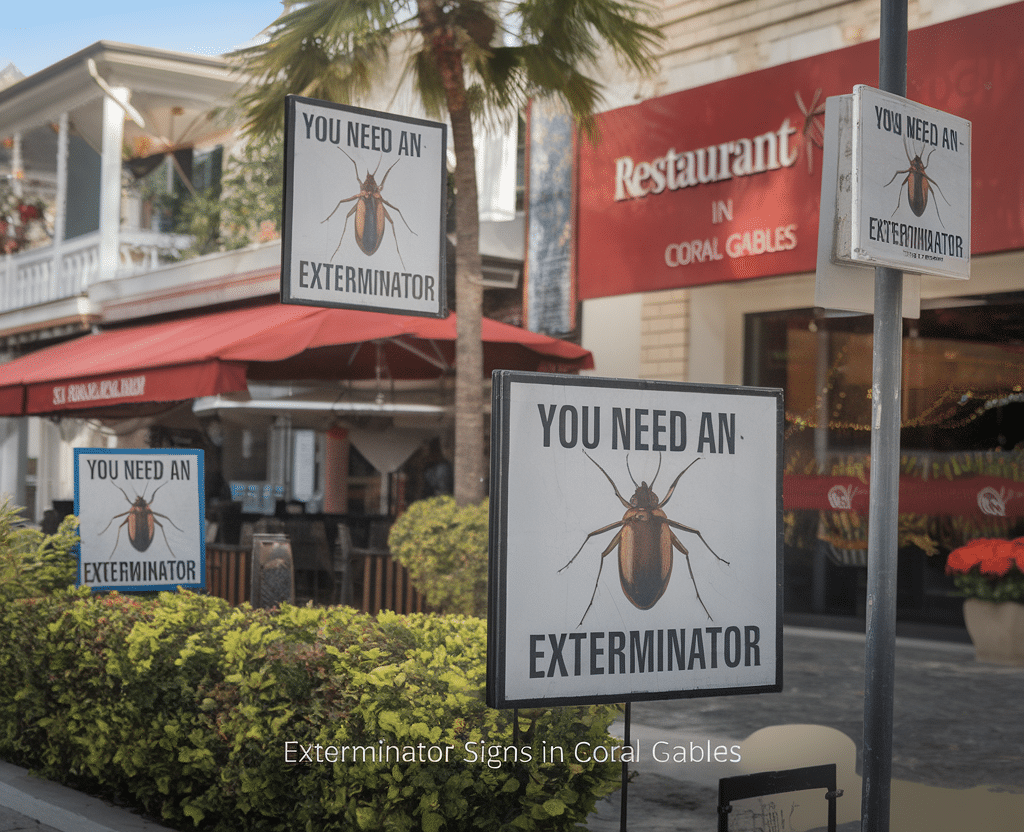
Picture this: You’re enjoying your morning coffee on your beautiful Coral Gables patio, surrounded by the lush tropical landscaping that first made you fall in love with your home. Then you notice them. Tiny mud tubes snaking up the side of your stucco exterior. Or maybe it’s the sound that wakes you at 2 AM, a soft scratching inside your Mediterranean Revival walls that shouldn’t be there. Perhaps it’s the moment you open your pantry and spot those telltale dark droppings behind the cereal boxes.
Your heart sinks because you know what this means. Your sanctuary, your carefully maintained piece of the City Beautiful, has become home to something uninvited. And that knot in your stomach? It’s completely justified. Because here’s what many Coral Gables homeowners discover too late: those small signs you’re tempted to ignore rarely stay small.
What starts as a single cockroach scurrying across your kitchen floor at night becomes a full-blown infestation hiding behind your walls. That occasional scratching sound transforms into a family of roof rats nesting in your attic insulation. Those tiny mud tubes? They’re highways for termite colonies that are steadily consuming the wooden bones of your home, meal by invisible meal, 24 hours a day.
The truth is, your Coral Gables home faces pest pressures that homes in other parts of the country simply don’t experience. And recognizing the warning signs early can be the difference between a straightforward treatment and a financial nightmare that runs into tens of thousands of dollars.
Why Your Coral Gables Home Is a Pest Paradise
Let’s talk about what makes your neighborhood so special, and why those same features create challenges most homeowners don’t anticipate until it’s too late.
Those magnificent banyan trees that create cathedral-like canopies over your street? They’re not just beautiful. They’re highways for roof rats who travel from tree to tree, eventually finding their way onto your tile roof and into your attic. The lush tropical gardens that give your property that resort-like feeling? They maintain humidity levels that cockroaches, silverfish, and termites absolutely thrive in.
Your stunning Mediterranean Revival architecture with its clay tile roof, stucco exterior, and rich wooden details represents decades of craftsmanship and history. It’s also full of the small gaps, hidden crevices, and wooden elements that pests find irresistible. Those architectural details that add character to your home also create countless entry points and hiding places that make pest control more complex than in modern construction.
Here’s something most Coral Gables homeowners don’t realize: the microclimate in your specific neighborhood differs from areas just a few miles away. If you live near the Venetian Pool or along those gorgeous tree-canopied streets like Coral Way and Granada Boulevard, the dense overhead coverage creates higher humidity levels. That persistent moisture doesn’t just keep your landscaping green. It accelerates pest activity, particularly for moisture-loving species like subterranean termites that cause some of the most expensive damage.
And then there’s the challenge of maintaining pest control while respecting Coral Gables’ strict building codes and historical preservation requirements. You can’t just patch holes or modify structures without consideration for architectural integrity. This is where having local expertise becomes absolutely critical, something we’ll explore more in a moment.
The Warning Signs Your Home Is Trying to Tell You Something
Your home communicates with you constantly. The question is: are you listening? Let me share what we’ve learned from years of serving homeowners throughout Coral Gables, South Miami, Pinecrest, and surrounding Miami-Dade communities.
When You See the Evidence
Last month, a homeowner in the Riviera section called us after finding what she thought were coffee grounds scattered along her kitchen baseboards. She’d been sweeping them up for weeks, frustrated that someone in her family kept spilling. Except nobody drank coffee. Those weren’t coffee grounds. They were cockroach droppings, and they told us she had a significant German cockroach population thriving behind her kitchen walls.
Physical evidence rarely lies. When you find droppings, the location tells an important story. Rodent droppings near baseboards or in pantries mean you have active traffic in those areas. In Coral Gables homes, roof rat droppings in the attic are incredibly common because of all those fruit trees in your yard. Rats love mangos and avocados as much as you do, and those trees provide both food and access routes to your roof.
Cockroach droppings appear as dark specks or smears, especially concentrated where moisture accumulates in kitchens, bathrooms, and laundry rooms. If you’re finding them, you’re seeing evidence of far more roaches than you’ve actually spotted. For every one you see, dozens more hide in places you can’t easily access.
Then there are the shed skins. Many insects molt as they grow, leaving behind perfect casings of their former selves. Finding these translucent shells, particularly from cockroaches or palmetto bugs, means you have an established population that’s actively reproducing. In older Coral Gables homes with crawl spaces, these accumulate in undisturbed areas where populations have been growing for months or even years.
Watch for unexplained property damage, too. Holes chewed in food packaging. Gnaw marks on wooden window frames or door jambs. Shredded insulation in your attic or garage. These aren’t random occurrences; they’re evidence of pests establishing territory in your home. And if you have detached structures like a pool house or guest cottage? Check them carefully. These auxiliary buildings often harbor rodent populations that eventually migrate to your main residence.
When Your Home’s Structure Speaks
There’s a sound you never forget once you’ve heard it: tapping a wooden beam and hearing that hollow echo that shouldn’t be there. It means termites have been eating the interior of the wood while leaving just a thin shell intact. It’s architectural camouflage, and it’s terrifying because of what it represents.
Termite damage exceeds five billion dollars annually in the United States, and Miami-Dade County ranks among the highest-risk areas in the entire country. If your Coral Gables home was built between the 1920s and 1950s, it likely features extensive woodwork throughout. Beautiful craftsmanship, absolutely. But also abundant food sources for termite colonies that can number in the hundreds of thousands.
Pay attention to floors that feel slightly soft or springy, particularly in bathrooms and kitchens where moisture accumulates. Subterranean termites may have compromised the wooden supports beneath. Ceiling stains might indicate roof leaks attracting moisture-seeking pests, or they could suggest rodent urine accumulation in your attic.
Those pencil-width mud tubes climbing your foundation or stucco exterior? They’re not just a curiosity. They’re definitive proof of termite activity. Subterranean termites build these highways to travel between their underground colonies and the wooden buffet that is your home. Finding these tubes isn’t a maybe situation. It’s a call-your-exterminator-immediately situation.
Sometimes paint bubbles or peels away from wood surfaces in patterns that look like water damage. But when you investigate, there’s no water source nearby. That’s often termite activity beneath the surface, trapping moisture inside the wood as they consume it from the inside out.
The Sounds and Smells That Signal Trouble
A couple in the Little Gables neighborhood contacted us after hearing scratching sounds in their walls for several weeks. They’d convinced themselves it was palm fronds scraping the exterior during windy weather. Except the sounds continued on perfectly calm nights. And they were coming from inside the walls, not outside.
When we investigated, we found a roof rat population that had established nests in the space between their roof deck and clay tiles, a favorite location in Coral Gables homes. The rats were using the interior walls as highways to access food sources throughout the house. The homeowners had been hearing their commute.
Scratching, scurrying, or squeaking sounds in walls, ceilings, or floors almost always indicate rodent activity. These sounds typically intensify at dusk and dawn when rodents are most active. Some homeowners even report hearing subtle clicking or rustling sounds from termite colonies, though these are easy to miss among normal house sounds.
Then there are the smells. A dead rodent in your walls creates an unmistakable putrid odor that intensifies over days as decomposition progresses. Large cockroach populations generate a musty, oily smell that’s hard to describe but impossible to forget once you’ve encountered it. Bed bugs produce an oddly sweet, musty odor that people often compare to coriander or spoiled raspberries.
If your home has developed unexplained odors that persist despite thorough cleaning, pests may well be the source. Trust your nose. It’s telling you something’s wrong.
When Your Pets Know Before You Do
Here’s something fascinating: your dog or cat likely detected your pest problem weeks before you did. Animals hear frequencies and detect odors completely beyond human perception. If your pet suddenly becomes fixated on a specific wall, repeatedly paws at baseboards, or refuses to enter a room they previously loved, take it seriously. They’re sensing something you can’t.
A homeowner in Kendall told us her cat had been staring at the same section of wall for three days straight, occasionally pawing at the baseboard and meowing insistently. She thought the cat was being strange. Turned out, a mouse family had nested inside that wall cavity, and her cat heard every movement, every squeak, every rustle of nesting material.
The One You See Means Many You Don’t
Seeing a single cockroach scurry across your floor might seem like a minor thing. It’s not. Here’s the reality: most pest species are nocturnal and specifically avoid human contact. If you’re seeing pests during daylight hours or in frequently trafficked areas, it suggests their population has grown large enough that overcrowding is forcing them into the open.
For every cockroach you spot, researchers estimate dozens more hide in places you can’t easily access. For every mouse you see, several more nest in your walls. Pest populations don’t occur in ones or twos. They occur in colonies, families, and infestations. That single sighting is your early warning system, and ignoring it means allowing the problem to multiply exponentially.
Why Waiting Costs More Than You Think
I understand the temptation to wait. Maybe it’s not that bad. Maybe they’ll leave on their own. Maybe that over-the-counter spray will handle it. I get it. Nobody wants to deal with this, and professional pest control feels like an expense you’d rather avoid.
But here’s what happens while you’re waiting: pest populations grow exponentially. A single female German cockroach produces up to 400 offspring during her lifetime. Rodent pairs generate dozens of descendants within months. Termite colonies expand continuously, consuming more of your home’s structure with each passing day.
The mathematics of pest reproduction are brutal and unforgiving. Today’s minor problem becomes next month’s major infestation, and the cost increases proportionally. We’ve seen Coral Gables homeowners spend $30,000 to $50,000 repairing termite damage that could have been prevented with a treatment costing a few hundred dollars if caught early.
Property damage accumulates continuously during active infestations. Termites don’t take breaks. They consume wood 24 hours daily. Rodents gnaw constantly to wear down teeth that never stop growing. Insects contaminate increasingly larger areas as populations expand. Every day of delay means more extensive damage and higher remediation costs.
And then there are the health risks. Higher pest numbers mean increased allergen production, more disease transmission opportunities, and greater contamination of living spaces. For families with young children, elderly residents, or anyone with compromised immune systems, these escalating health risks become genuinely serious concerns.
A homeowner in Palmetto Bay waited six months after first noticing termite mud tubes, hoping the problem would somehow resolve itself. By the time she contacted us, the termites had damaged not just wooden framing but also portions of drywall and even some masonry as the colony expanded. Her initial quote for repairs exceeded $40,000. That six-month delay cost her literally tens of thousands of dollars.
What You Can Do Right Now
While professional pest control remains essential for active infestations, you’re not powerless. There are meaningful steps Coral Gables homeowners can take to reduce pest attraction and create less hospitable environments.
Start with your property’s exterior. Walk your perimeter and really look at how vegetation relates to your structure. Those beautiful bougainvillea and hibiscus planted tight against your foundation? They’re creating perfect harborage for pests and moisture accumulation against your walls. Trim tree branches and shrubs at least three feet away from your home’s exterior, eliminating the bridges that allow pests direct access to your roof and upper floors.
Your gutters matter more than you think. When they clog and overflow, water accumulates against your foundation, creating the moisture conditions that subterranean termites need to thrive. Clean them regularly, ensure downspouts direct water well away from your foundation, and address any areas where water pools after rainfall. These become breeding grounds for mosquitoes and attract various pest species.
If you store firewood, lumber, or other organic materials on your property, keep them at least 20 feet from your home’s exterior and elevate them off the ground. These materials attract termites, and keeping them distant reduces the likelihood of colony migration toward your structure.
Inside your home, think about what attracts pests: food, water, and shelter. Store all food in airtight containers, including pet food that many homeowners leave in open bags. Clean up spills and crumbs immediately. Take garbage out regularly and use containers with sealed lids. Fix any leaking faucets, pipes, or appliances promptly. Reduce clutter that provides hiding places.
In Coral Gables’ humid climate, moisture control proves particularly critical. Use dehumidifiers in damp areas. Ensure adequate attic ventilation. Address plumbing leaks immediately. That persistent humidity attracts and sustains pest populations, so controlling it creates a less hospitable environment.
Walk around your home’s exterior and seal any cracks, gaps, or openings you discover. Pay attention to areas where utility lines enter, gaps around window frames and door jambs, cracks in stucco or foundation, damaged or missing roof tiles, and gaps under doors. Install door sweeps and appropriate screening over attic vents and crawl space openings.
For historic Coral Gables homes, this becomes more nuanced. You need to maintain architectural integrity while effectively excluding pests. Many traditional materials and techniques can be adapted for pest prevention without compromising historical authenticity, but it requires expertise and care.
When DIY Isn’t Enough
There’s a point where over-the-counter solutions and prevention measures simply can’t address the scope of the problem. Recognizing that point early saves money, prevents additional damage, and protects your family’s health.
If pests return despite repeated treatment attempts, you’re dealing with hidden nesting sites, multiple entry points, or conditions that retail products can’t effectively address. Professional exterminators have training, experience, and equipment to identify root causes and implement comprehensive solutions that actually solve the problem rather than temporarily suppressing visible symptoms.
Accurate pest identification matters enormously. Many homeowners mistake carpenter ants for termites, or confuse different cockroach species with one another. Since treatment strategies vary significantly by pest type, misidentification leads to wasted time, money, and effort on treatments that can’t work because they’re targeting the wrong pest.
When pests have established colonies within walls, attics, or other structural voids, surface treatments prove completely ineffective. Coral Gables homes’ complex architecture often conceals extensive infestation areas that require professional inspection technologies like thermal imaging and moisture meters to locate and properly treat.
Certain situations create urgent health or structural risks demanding immediate professional response: rodent infestations posing disease transmission risks, termite colonies threatening structural integrity, stinging insect nests in high-traffic areas, or bed bug infestations affecting sleep quality and mental health. These aren’t DIY situations. They’re call-the-professionals-now situations.
The Professional Difference
At Dade Pest Solutions, we’ve spent years learning the specific pest pressures facing homes throughout Coral Gables, South Miami, Pinecrest, Coconut Grove, Kendall, Palmetto Bay, and surrounding Miami-Dade communities. Each neighborhood has its own unique challenges based on architecture, landscaping, microclimate, and a dozen other factors that influence which pests you’re likely to encounter and how they’ll behave.
When we inspect your property, we’re not just looking for the obvious signs. We’re examining architectural details that create vulnerabilities. We’re assessing moisture conditions. We’re identifying conducive factors that make your property attractive to specific pest species. We’re using specialized technology like moisture meters, thermal imaging, and inspection equipment that reveals hidden activity inside walls and other inaccessible spaces.
Based on that thorough assessment, we develop customized treatment plans that address your specific situation. This integrated approach combines professional-grade products applied according to strict safety protocols and Florida regulations, physical barriers and exclusion techniques that prevent future infestations, strategic monitoring and baiting systems, and environmental modifications that make your property less hospitable to pests long-term.
But our work doesn’t end with initial treatment. We provide follow-up visits to assess effectiveness, address any new concerns, and maintain protective barriers. Regular service visits, whether quarterly or monthly depending on your situation, create continuous protection that catches emerging problems before they escalate.
We document everything. Every inspection finding, every treatment application, every follow-up visit creates a comprehensive service history that’s valuable for property maintenance planning and potential real estate transactions. This professional record demonstrates responsible property stewardship and can facilitate smoother home sales when that time comes.
Perhaps most importantly, we understand local regulations and preservation requirements. Coral Gables’ historic district regulations, building codes, and aesthetic standards create unique challenges that out-of-area pest control companies often don’t appreciate or know how to navigate. We’ve built our reputation on implementing effective pest management while respecting architectural heritage and complying with all local requirements.
Your Home Deserves Better
Your beautifully landscaped Coral Gables property represents more than just a financial investment. It’s where you’ve created memories with family and friends. It’s where you relax after long days. It’s the sanctuary you’ve worked hard to create and maintain.
Pest problems undermine all of that. They create stress. They pose health risks. They cause property damage. And they generate that persistent anxiety that comes from knowing your home harbors unwanted inhabitants doing damage you can’t see.
You don’t have to live with that. Whether you’re noticing unexplained property damage, finding pest droppings, hearing suspicious sounds in your walls, or simply wanting to prevent problems before they start, professional pest control provides lasting solutions that restore your peace of mind.
We’ve helped countless homeowners throughout Miami-Dade County protect their properties, from Mediterranean Revival homes in Coral Gables’ historic districts to modern residences in Country Walk, Cutler Bay, Homestead, Kendall, and The Crossings. We understand the unique pest pressures your property faces because we live and work in this community too.
Don’t wait until minor signs become major problems. Early intervention costs a fraction of what you’ll spend after allowing infestations to escalate, and it prevents the structural damage and health concerns that make pest problems genuinely serious.
Contact Dade Pest Solutions today for a comprehensive evaluation of your property. We’ll identify any current issues, explain exactly what’s needed in straightforward terms, and create a protection plan tailored specifically to your home and situation. Your family deserves the comfort and safety of a pest-free living environment, and we’re here to deliver exactly that.
Because your home isn’t just another service call to us. It’s your sanctuary. And protecting it is what we do best.

