
Picture this: it’s three days before Thanksgiving, and you’re standing in your beautifully appointed Coral Gables kitchen, ready to start your holiday baking. You reach for that five-pound bag of flour you bought last week, only to find a small hole gnawed through the side, white powder trailing across your pantry shelf. Your heart sinks. The bag of sugar next to it? Same story. And those chocolate chips you splurged on for your abuela’s famous cookies? Gone. Just empty, shredded packaging and tiny droppings that tell an unwelcome story about uninvited guests who’ve been helping themselves to your holiday supplies.
If you’ve ever experienced this moment, you know it’s more than just frustrating. It’s violating. Your home is supposed to be your sanctuary, especially during the holidays when you’re preparing to welcome family and friends. But here’s what many homeowners in Coral Gables don’t realize until it happens to them: rats don’t need an invitation to join your holiday preparations. In fact, the very things that make this season special—the abundance of food, the festive atmosphere, the warmth of your home—create the perfect conditions for these persistent rodents to move in and make themselves comfortable.
Why Your Coral Gables Home Becomes a Rat Magnet During the Holidays
There’s something almost magical about Coral Gables during the holiday season. The Mediterranean Revival architecture glows with festive lights, mature banyan trees provide shade over streets lined with homes that have stood since the 1920s, and the subtropical breeze carries the scent of blooming jasmine mixed with holiday baking. But this same charm—these beautiful old homes with their historic character and lush, tropical landscaping—creates a perfect storm for rat activity.
Here’s the thing: rats are remarkably intelligent creatures with an incredible sense of smell. They can detect food from impressive distances, and during the holidays, your home broadcasts an irresistible signal. Think about it. You’ve probably stocked up on baking supplies weeks in advance. Bags of flour, sugar, nuts, chocolate, dried fruits, and specialty ingredients sit in your pantry, garage, or even outdoor storage. You’ve got decorative gourds on the porch, perhaps a bowl of oranges on the counter, and let’s not forget the pet food you’ve doubled up on because the in-laws are bringing their dog.
Each of these items sends out a scent trail that rats find impossible to ignore. And when temperatures dip into the 60s at night—yes, even our “mild” South Florida winters—rats start looking for cozy indoor accommodations. Your warm, food-filled home? It’s like a five-star resort from their perspective.
The Coral Gables Factor: When Historic Charm Meets Modern Challenges
What many homeowners in communities like Pinecrest, South Miami, and especially Coral Gables discover is that their beautiful historic homes, while architecturally stunning, weren’t exactly built with rodent exclusion in mind. Homes from the 1920s and 1930s have settled foundations, original wood construction, and countless small gaps where modern utilities have been retrofitted into vintage structures. Those gorgeous clay tile roofs? They can shift over decades, creating entry points. Those charming archways and decorative elements? They sometimes harbor gaps that provide perfect access routes.
Add to this the city’s commitment to preserving its tree canopy and lush landscaping—which we all love—and you’ve got branches that function as highways leading straight to your roof, dense plantings that provide cover, and fruit trees that drop mangoes and avocados that attract rats to your property in the first place. It’s not a design flaw; it’s simply the reality of living in one of Miami-Dade County’s most beautiful and historic neighborhoods.
The Wake-Up Call: Recognizing You’re Not Alone in Your Home
Most homeowners don’t discover their rat problem by actually seeing a rat. More often, it’s a series of small, unsettling clues that gradually paint a disturbing picture. Maybe you hear scratching sounds in the walls late at night when the house is quiet. Your dog has started acting strangely, sitting and staring at the baseboards in the kitchen with laser focus. Or perhaps you’ve noticed those telltale dark smudges along the bottom of your walls—grease marks left behind as rats follow their established routes night after night.
One Kendall homeowner recently shared her discovery story with us: she was putting away groceries when she noticed something odd about the corner of her pantry. A bag of rice she’d bought weeks earlier had a suspiciously clean hole chewed through the bottom. When she pulled it forward, rice poured out like sand through an hourglass, and there, behind the bag, were dozens of dark, capsule-shaped droppings. “I just stood there holding this leaking bag of rice, completely horrified,” she told us. “And then I started pulling other things forward, and I realized half my pantry had been compromised. This was two weeks before Christmas, and I had to throw away probably two hundred dollars worth of ingredients.
The Evidence Rats Leave Behind
Rats are surprisingly considerate in one respect: they always leave evidence of their presence. The trick is knowing what to look for and where to look. During your holiday preparations, take a few minutes to inspect these areas:
- Check along the baseboards in your kitchen and pantry for dark, greasy smudge marks or small, dark droppings about half an inch long
- Look for gnaw marks on food packaging, especially on bags and boxes stored in lower cabinets or on garage shelves
- Examine the corners of your pantry and storage areas for shredded paper, fabric, or insulation that might indicate nesting
- Listen carefully at night—scratching, scurrying, or squeaking sounds in walls or ceilings are clear indicators of activity
- Watch your pets’ behavior; they often detect rodent activity long before we notice the obvious signs
- Inspect stored holiday decorations and seasonal items, as these undisturbed boxes become prime nesting locations
What strikes many homeowners throughout Richmond West and Country Walk is how violated they feel when they discover the evidence. This is your home, your safe space, and now you’re learning you’ve been sharing it with pests that are contaminating your food and potentially spreading disease. That feeling is completely valid, and it’s exactly why rat-proofing your holiday food storage isn’t just about saving money on ruined ingredients—it’s about reclaiming your peace of mind.
The Real Dangers Hiding in Your Holiday Pantry
Let’s talk about something that doesn’t always make it into polite holiday conversation but absolutely needs to be said: rats carry serious diseases. We’re not trying to alarm you unnecessarily, but you deserve to know what’s at stake when rats have access to your food storage.
When a rat contaminates food, it’s not just leaving behind droppings or urine in obvious places. These rodents groom themselves constantly, and when they do, they spread bacteria all over their bodies. Then they walk through your flour, across your sugar, over the packages in your pantry. They urinate as they move, leaving behind pathogens that can cause leptospirosis. Their droppings, even after they’ve dried, can transmit salmonella and other dangerous bacteria.
Think about the flow of your holiday preparations. You’re baking cookies with your grandchildren, preparing that special flan recipe, creating memories in your kitchen. But if rats have contaminated your ingredients, you could be unknowingly exposing your family—especially young children and elderly relatives—to serious health risks. Homeowners in communities throughout Cutler Bay and Palmetto Bay have learned this lesson the hard way, discovering infestations only after family members became unexpectedly ill.
Beyond Health: The Hidden Costs of Rat Damage
The health risks are scary enough, but rats also cause property damage that can be both expensive and dangerous. Their teeth never stop growing, which means they never stop gnawing. They’ll chew through electrical wiring, creating fire hazards in your walls. They’ll damage insulation, compromise HVAC ductwork, and destroy irreplaceable items stored in attics and garages.
One family in Little Gables discovered their rat problem when they started smelling something strange and found that rats had chewed through the insulation around their refrigerator’s electrical cord. The repair cost was significant, but what still bothers them most, they told us, was finding their grandmother’s wedding dress—stored carefully in the attic for decades—partially destroyed for nesting material. Some damage has a price tag. Other damage is simply heartbreaking.
Creating a Fortress: Rat-Proof Storage Solutions That Actually Work
Now for the good news: protecting your holiday food storage from rats is entirely achievable. It requires some upfront investment and a shift in how you think about food storage, but once you’ve implemented these strategies, you’ll wonder why you didn’t do it sooner. Think of it as upgrading your home’s defenses—an investment that pays dividends in peace of mind, food safety, and long-term cost savings.
The Container Revolution: What Keeps Rats Out
Here’s a truth that might surprise you: that cereal box from the store? Not secure. That bag of flour, even unopened? Not secure. Those chips in the supposedly sealed bag? Definitely not secure. Rats can chew through cardboard like it’s tissue paper, and thin plastic bags are barely an inconvenience. So what actually works?
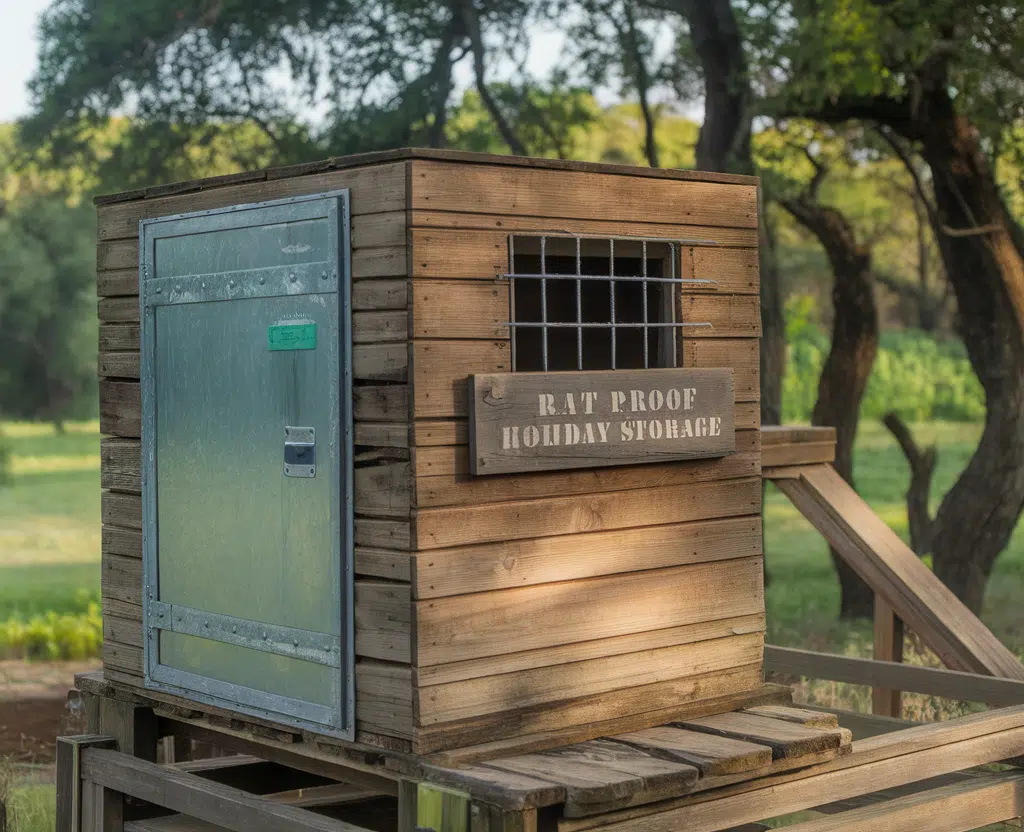
Glass containers with metal locking lids are your first line of defense. Yes, they’re more expensive than plastic, and yes, they’re heavier to move around. But they’re also completely rat-proof and will last for decades. For homeowners in Homestead and Redland who do a lot of holiday baking, investing in a set of large glass jars with clamp-down lids transforms your pantry into a secure space. Transfer your flour, sugar, rice, pasta, nuts, chocolate chips, and other dry goods into these containers the moment you bring them home from the store.
If glass feels too expensive or impractical for everything, heavy-duty plastic containers with tight snap-lock lids are your second-best option. Notice we said heavy-duty—the thick, hard plastic kind, not the thin, flexible containers that rats can actually chew through. These work well for items like crackers, cookies, and baked goods that you’ll use up relatively quickly.
For bulk storage, especially in garages where many Coral Gables families store extra pet food, potatoes, onions, and overflow pantry items, metal containers with tight-fitting lids offer maximum security. They’re also useful in areas where temperatures fluctuate, as they provide better protection than plastic.
Organization Strategies That Double as Rat Prevention
How you organize your storage space matters almost as much as what you store things in. Rats love clutter because it provides cover and concealment. A messy, disorganized pantry with bags and boxes piled on the floor? That’s rat paradise. A clean, organized space with everything elevated and visible? Much less appealing.
Start by getting everything off the floor—and we mean everything. Install solid shelving or use existing cabinets, but make sure all food items sit at least six inches above ground level. This simple change eliminates hiding spots and makes any rat activity immediately visible.
Next, declutter ruthlessly. Remove all unnecessary packaging. Those cardboard boxes you’ve been keeping “just in case”? They’re potential nesting material. Consolidate items, use clear containers when possible so you can see what’s inside without opening them, and create designated zones for different types of food. When everything has a specific place, you’ll notice immediately if something has been disturbed.
Families throughout The Crossings and Riviera have found that implementing a first-in, first-out rotation system not only prevents food waste but also ensures they’re regularly handling and inspecting their stored items. When you’re constantly moving through your inventory, rats have fewer opportunities to establish themselves unnoticed.
Special Considerations for Holiday-Specific Items
Holiday cooking brings special challenges because you’re storing foods you don’t normally keep on hand, often in larger quantities than usual. Those ten-pound bags of specialty flour for tamales? Transfer them immediately into multiple smaller containers rather than leaving them in the original packaging. The boxes of chocolate for holiday candy making? Metal tins with secure lids. The bags of nuts for baking? Glass jars in the pantry, not bags in the garage.
Pet owners face an additional challenge during the holidays, especially if you’re hosting guests with pets or have increased your own pet’s food supply. Pet food is incredibly attractive to rats, and leaving it in the original bag—even if you fold the top down—provides no real protection. Invest in a large metal container with a tight seal specifically for pet food, and never leave pet bowls out overnight.
And what about those decorative food items that are so popular during the holidays? Popcorn garlands, gingerbread houses displayed on the counter, decorative bowls of pinecones and dried oranges? These are basically open invitations to rats. If you love these traditional decorations, consider using artificial versions, or commit to displaying edible items only during active parties and gatherings, storing them in secure containers the rest of the time.
Beyond the Pantry: Whole-Home Protection Strategies
Here’s something that catches many homeowners by surprise: you can rat-proof your food storage perfectly and still have rat problems if you don’t address how they’re getting into your home in the first place. Rats don’t materialize inside your pantry—they’re coming from outside, finding ways in through surprisingly small openings, and then discovering your food storage. This means effective rat control requires thinking beyond just storage containers.
Sealing Your Home’s Exterior: The Foundation of Rat Prevention
Rats can squeeze through openings as small as a quarter. Yes, really. That gap around your AC line penetration? Possible entry point. The space where the dryer vent exits? Another option. The intersection where your porch meets the house? Potentially compromised. For homeowners in areas like Princeton and Naranja, conducting a thorough exterior inspection becomes crucial, especially before the holidays when you really don’t want to discover new evidence of rat activity.
Walk around your home’s perimeter with a critical eye. Look for gaps around pipes, vents, and utility lines. Check the foundation for cracks or spaces where the ground has settled away from the structure. Examine areas where different building materials meet—where stucco meets wood, where additions connect to the original structure, where porches attach to the main house. These transitions often create small gaps that are easy to overlook but provide perfect entry points for rats.
When you find openings, seal them with materials rats cannot chew through. Steel wool stuffed into gaps works temporarily, but for permanent solutions, use copper mesh, metal flashing, or hardware cloth. Avoid foam sealants alone—rats can chew through most types. Many Coral Gables homeowners discover that the real challenge isn’t sealing the obvious gaps; it’s finding all the non-obvious ones, which is where professional expertise becomes invaluable.
Roof Vulnerabilities: The Overlooked Entry Point
Rats are exceptional climbers, and in Coral Gables, with its abundant tree canopy and multi-story homes, roof access is often their preferred entry method. Those beautiful clay tile roofs that define the city’s Mediterranean character? They can shift and break over time, creating gaps. Roof vents, chimney intersections, and the areas where roof lines meet walls all become potential entry points.
Trim tree branches so they’re at least three feet away from your roof line. Yes, this might feel like you’re compromising the aesthetic appeal of your property, but branches touching or near your roof are literally highways that rats use to access your home. Many families in South Miami and Glenvar Heights have been amazed to discover, after trimming back vegetation, how much this single action reduced their rat activity.
Also ensure that all roof vents have intact, properly fitted screens, and that the flashing around your chimney and vent pipes remains sealed. These areas often deteriorate over time without anyone noticing because, well, when’s the last time you actually looked at your roof up close?
Landscape Management: Reducing Outdoor Attractions
Your beautiful Coral Gables landscape, with its fruit trees and tropical plants, is part of what makes living here so special. But it’s also providing food and cover for rat populations. This doesn’t mean you need to tear out your landscaping; it means managing it with rat prevention in mind.
Pick up fallen fruit promptly—those mangoes, avocados, and citrus fruits that drop in your yard are feast opportunities for rats. Keep shrubs near your foundation pruned so there’s clear space between the plants and your home’s exterior. This eliminates cover that rats use to approach your house undetected. Store garbage in metal cans with tight-fitting lids rather than plastic bags, and never leave pet food outdoors overnight.
Dense ground cover, piles of wood or debris, and overgrown areas all provide harborage for rats. A well-maintained yard with clear sight lines and minimal hiding spots is far less attractive to rodents than an overgrown jungle, no matter how charming that jungle might look.
When DIY Isn’t Enough: Recognizing the Need for Professional Help
There’s a moment in every homeowner’s rat-control journey when you realize you’re in over your head. Maybe you’ve sealed every gap you can find, transferred all your food into secure containers, and maintained impeccable cleanliness, but you’re still hearing scratching in the walls at night. Maybe you’ve caught three rats in traps, but the droppings in your pantry keep appearing. Maybe you’re just not sure where they’re getting in, and you’re exhausted from trying to figure it out while also attempting to prepare for the holidays.
This is the moment when calling professionals isn’t admitting defeat—it’s making a smart decision to protect your home and family.
What Homeowners in Coral Gables and Throughout Miami-Dade Are Discovering
Families throughout Homestead Base, Silver Palm, and surrounding communities have learned that professional pest control isn’t just about setting traps. It’s about expertise—knowing where to look for entry points that homeowners miss, understanding rat behavior well enough to predict their routes and nesting locations, and having access to professional-grade materials and techniques that simply aren’t available to DIY enthusiasts.
When you’re dealing with historic Coral Gables homes, professional experience becomes even more valuable. These structures require careful handling. Sealing gaps in ways that don’t damage historic materials, working with architectural features that can’t simply be altered, and understanding how these older homes are constructed—this knowledge comes from years of working in local neighborhoods, not from online tutorials.
At Dade Pest Solutions, we’ve worked in virtually every neighborhood throughout Miami-Dade County. We know what Coral Gables homes look like inside and out. We understand that a 1920s Mediterranean Revival has different vulnerability points than a 1960s ranch in Kendall or a 2000s construction in Country Walk. This local knowledge means we can provide truly customized solutions rather than generic approaches that might not address your specific situation.
What Professional Rat Control Actually Involves
When you work with experienced pest control professionals, the process starts with a comprehensive inspection—and we mean comprehensive. We’re not just walking through your kitchen and looking for droppings. We’re examining your entire property, interior and exterior, to identify every actual and potential entry point, assess the extent of the current infestation, locate nesting areas, and determine the travel routes rats are using.
This inspection often reveals surprises. Homeowners frequently tell us they had no idea about certain entry points or didn’t realize the extent of the problem. One family in Pinecrest was shocked to learn that rats were entering through a tiny gap where their AC lines penetrated the exterior wall—a gap so small they’d never noticed it, but plenty large enough for a determined rat.
Based on the inspection findings, we develop a customized exclusion and treatment plan. This isn’t a one-size-fits-all approach. Your historic Coral Gables home requires different solutions than a newer construction in Riviera. Your particular combination of entry points, infestation extent, and property characteristics determines the specific strategy we recommend.
The treatment phase combines strategic elimination of existing rat populations with comprehensive exclusion to prevent new rats from entering. We use professional-grade materials for sealing entry points—materials that will last and that rats truly cannot defeat. And because effective rat control isn’t just about the initial treatment, we provide follow-up monitoring to ensure the problem is fully resolved and stays resolved.
Throughout the process, our team provides guidance on the prevention measures you can implement—the food storage strategies, sanitation practices, and landscape management approaches that will help keep your home rat-free long-term.
Timing Matters: Planning Your Rat-Proofing for Maximum Holiday Protection
If you’re reading this in early November, you’re in a great position. Early to mid-November is the ideal time to implement comprehensive rat-proofing measures. You’ve got enough time to upgrade your storage containers, conduct a thorough property inspection, seal any identified gaps, and test your new systems before the real holiday cooking begins.
If you’re reading this a week before Thanksgiving? Don’t panic, but do act quickly. Focus on the immediate priorities: get your food into secure containers right away, do a quick check for obvious entry points and seal what you can, and schedule a professional inspection as soon as possible.
The period between Thanksgiving and New Year’s is when most homes have the highest volume of stored food. It’s also when you have the least time to deal with pest problems. This is why so many homeowners throughout The Crossings and Richmond West choose to schedule professional pest control inspections in October or early November—before the holiday rush makes everything more complicated and stressful.
Post-holiday, typically in January, is another excellent time for action. This is when you can honestly assess how your rat-proofing measures performed, identify any weak points in your system, and address problems before they become entrenched. Many Coral Gables residents treat their January pest control inspection as a regular part of their home maintenance routine, right alongside HVAC servicing and landscape maintenance.
Living in Coral Gables: Making Rat Prevention Part of Your Lifestyle
Here’s the truth about rat control in South Florida: it’s not a seasonal challenge you address once and forget about. Our year-round warm weather, abundant vegetation, and urban wildlife populations mean that rat prevention needs to be an ongoing practice, not a one-time project. The good news is that once you’ve set up proper systems and developed good habits, maintaining them becomes second nature.
Think of rat-proof food storage as a lifestyle upgrade rather than a temporary inconvenience. Those glass containers you invested in for holiday baking? They’ll protect your food year-round while also making your pantry more attractive and organized. The exterior sealing work you completed? It’s not just keeping out rats; it’s also improving your home’s energy efficiency and preventing other pest problems. The landscape management practices you’ve adopted? They’re enhancing your property’s appearance while reducing pest attractants.
Homeowners throughout Palmetto Bay, Cutler Bay, and surrounding neighborhoods who’ve committed to comprehensive rat prevention consistently tell us the same thing: once they’ve implemented these strategies, they can’t imagine going back to their old habits. The peace of mind that comes from knowing your food storage is secure and your home is protected is worth every bit of effort involved.
Your Holiday Season Deserves to be Rat-Free
The holidays are supposed to be a time of joy, celebration, and connection with the people you love. They shouldn’t be overshadowed by the stress and disgust of discovering that rats have invaded your home and contaminated your food. You deserve to bake your family recipes without worrying about whether your ingredients are safe. You deserve to welcome guests into a home you’re confident is clean and pest-free. You deserve to create holiday memories that center on laughter and love, not on unwelcome discoveries in the pantry.
Protecting your Coral Gables home from rat activity requires a combination of smart storage solutions, thorough property maintenance, and professional expertise when needed. It’s an investment—of time, attention, and resources—but it’s one that pays returns in safety, health, and peace of mind.
For families throughout Coral Gables and the surrounding Miami-Dade communities we serve—from Homestead to South Miami, from Kendall to Pinecrest—Dade Pest Solutions has become the trusted partner in protecting homes from rat infestations. We’ve seen every type of rat problem these beautiful neighborhoods can present, and we’ve developed solutions that work specifically for local conditions. Our team understands the unique characteristics of Coral Gables homes, the challenges posed by our subtropical climate, and the importance of protecting your family’s health and your property’s value.
We’re not a faceless national chain with generic solutions. We’re your neighbors, deeply rooted in Miami-Dade County, with years of experience protecting homes just like yours. When you call Dade Pest Solutions, you’re connecting with a local team that genuinely understands what you’re dealing with and has the expertise to solve it quickly and effectively.
This holiday season, give yourself the gift of peace of mind. Whether you need a comprehensive inspection to identify vulnerabilities, professional exclusion work to seal your home against rodent entry, or emergency treatment because you’ve discovered active rat activity, our team is ready to help. We know the holidays are a busy time—that’s exactly why we’re here to make this part of home protection as easy and stress-free as possible for you.
Don’t let rats compromise your holiday celebrations or threaten your family’s health. Reach out to Dade Pest Solutions today and discover why homeowners throughout Coral Gables, Country Walk, Little Gables, Naranja, Princeton, Redland, Riviera, Silver Palm, and all the communities we serve trust us to protect what matters most. Your beautiful home deserves expert care, and your family deserves a safe, rat-free holiday season.
Contact us for a thorough inspection and customized treatment plan designed specifically for your Coral Gables home. Your peace of mind this holiday season is just a phone call away, and our local team is ready to help you protect your home, your food, and your family.

17 Years of Pest Control Experience Founder and Owner of Dade Pest Solutions Proud Resident of South Florida
Shaun Judy, a dedicated South Florida native, is the founder and driving force behind Dade Pest Solutions. With over 17 years of hands-on experience in the pest control industry, Shaun has built a reputation for reliability, results, and real local knowledge. His journey began with a deep commitment to protecting homes from pests using proven methods and innovative solutions. Raised with a strong work ethic and a passion for service, Shaun treats every property as if it were his own—delivering expert care with a personal touch.
