
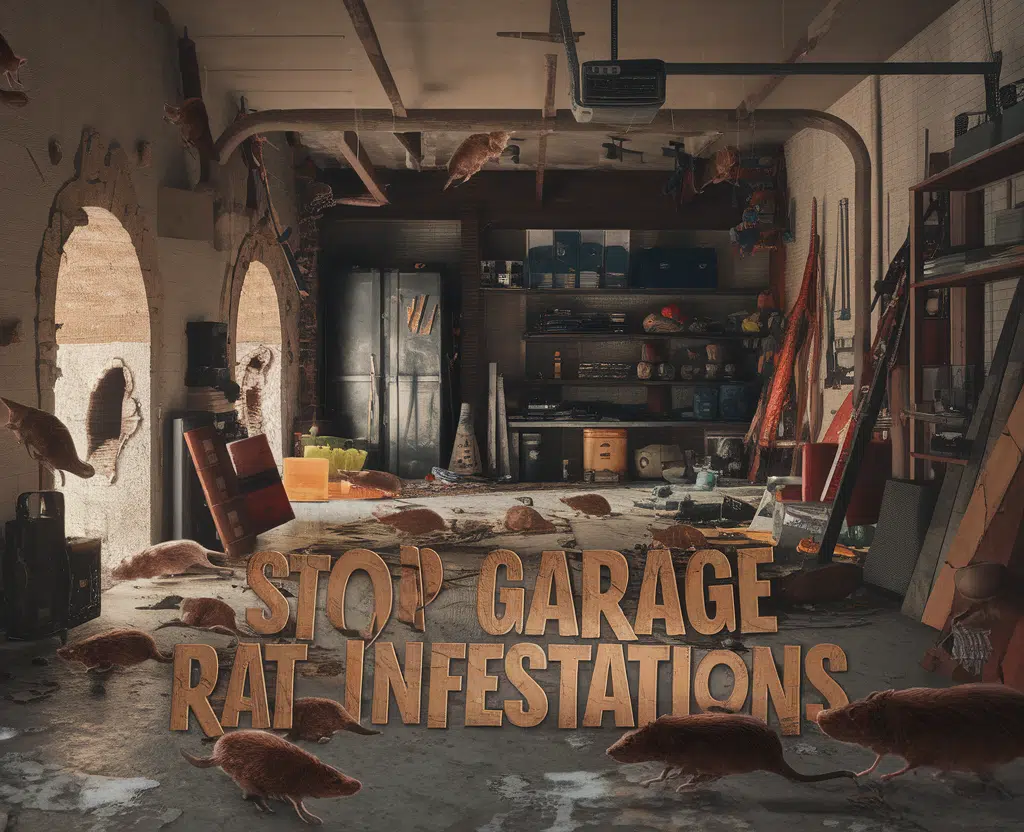
Picture this: You’re pulling into your Coral Gables garage after a long day, looking forward to unwinding in your beautiful home. But as you step out of the car, something catches your eye. Small, dark droppings scattered near those storage boxes you’ve been meaning to organize. Gnaw marks on the cardboard containers holding your holiday decorations. And then you hear it: a faint scratching sound coming from the corner, just behind the shelving unit.
Your heart sinks. You’re not alone in your garage anymore.
It’s a moment every homeowner dreads, and if you’re reading this, chances are you’ve already had that sinking feeling. Maybe you’ve spotted the telltale signs, or perhaps you’re just starting to suspect something isn’t quite right. Either way, I want you to know something important: you’re not alone, and this isn’t a reflection on how well you maintain your home.
The truth is, garage rat infestations happen to the best-kept homes in Coral Gables. In fact, the very things that make our neighborhood so beautiful—those magnificent mature trees, the lush landscaping, the proximity to the waterways—create perfect conditions for these persistent little invaders. I’ve worked with homeowners throughout Miami-Dade County for years, and I can tell you that some of the most meticulously maintained properties in Coral Gables have faced this exact challenge.
Why Your Beautiful Coral Gables Home Attracts Rats
Here’s something that might surprise you: the qualities that drew you to Coral Gables are the same ones that attract rats. It’s what I call the City Beautiful paradox.
Think about what makes our community special. Those towering banyan trees that create shaded canopies over our streets? They’re natural highways for rats, letting them travel from property to property without ever touching the ground. The Miami Riviera Canal and Coral Gables Waterway that add such charm to our neighborhoods? They provide rats with the water sources they need. Those mango, avocado, and lychee trees in your backyard? When fruit falls to the ground, it becomes an all-you-can-eat buffet.
And your garage? Well, that’s where all these factors come together in what rats consider prime real estate.
Unlike our northern neighbors who get a break from rodent activity during harsh winters, we deal with something different here in South Florida. Our subtropical climate means rats stay active all year long. But certain times do bring increased risk. During our summer rainy season from June through October, heavy downpours send rats scrambling for dry shelter. When hurricane season arrives and you’re busy storing supplies and preparing your home, those extra boxes and items in your garage create perfect hiding spots. Even our mild winter months can trigger rats to seek the relative warmth of indoor spaces.
What really makes Coral Gables unique, though, is our housing stock. Many of our homes date back to the 1920s through 1950s. Don’t get me wrong—that Mediterranean Revival architecture is stunning, and the craftsmanship of that era is remarkable. But decades of settling, weather exposure, and natural aging create vulnerabilities that rats are remarkably good at finding.
Weatherstripping around garage doors deteriorates. Foundations develop small cracks. Utility lines that once fit snugly when installed now have gaps around them. Wood components that have weathered Florida’s heat and humidity become easier for rats to gnaw through. And because so many Coral Gables garages are attached directly to the main house, rats that get into your garage are just one door away from your living spaces.
Reading the Signs Before It’s Too Late
The other day, I was talking with a homeowner in Pinecrest who told me she wished she’d known what to look for sooner. She’d been seeing small signs for weeks but didn’t realize what they meant until the problem had grown significantly. That conversation inspired me to share what I’ve learned about catching these infestations early.
Rat droppings are usually the first thing people notice. They’re about three-quarters of an inch long, dark brown or black, with blunt ends rather than pointed ones. Fresh droppings look moist and dark, almost shiny. As they age, they dry out and turn gray. You’ll typically find them along walls, in corners, and near food sources because rats are creatures of habit—they follow the same paths over and over.
Those paths themselves leave evidence. Rats have oily fur that leaves dark, greasy smudge marks along the walls, pipes, and beams they travel past repeatedly. If you run your hand along the baseboards in your garage and it comes away with a dark, greasy residue, that’s a red flag.
Gnaw marks tell their own story. A rat’s teeth never stop growing, which means they never stop gnawing. They’ll chew on wooden door frames, plastic storage containers, and cardboard boxes. But here’s what really concerns me: they’ll also gnaw on electrical wiring. I’ve seen garage fires started this way, and it’s something that keeps me up at night because it’s so preventable.
Sometimes the evidence is auditory rather than visual. At dawn and dusk, when rats are most active, you might hear scratching or scurrying sounds. These sounds might come from within walls, from ceiling spaces, or from behind those stacks of storage bins you rarely move. You might hear squeaking or chattering too, which tells you you’re dealing with multiple rats communicating with each other.
And then there’s the smell. As an infestation grows, you’ll start to notice a distinctive musky, ammonia-like odor from rat urine. It’s particularly strong in enclosed spaces and can permeate stored items, sometimes requiring you to throw away contaminated belongings.
Your pets often know before you do. I can’t tell you how many times homeowners have told me their dog or cat started acting strangely around the garage—pawing at walls, staring intently at specific spots, or refusing to enter certain areas. Animals have much more sensitive hearing and smell than we do, and they pick up on these intruders quickly.
What’s Really at Stake Here
Let me be straight with you about something: the risks of garage rat infestations go far beyond the “ick” factor of having rodents in your space. I’ve seen firsthand the damage these situations can cause, and I want you to understand what you’re really dealing with.
The health implications alone are serious. Rats carry diseases that can affect your family—leptospirosis, which spreads through their urine and can cause severe liver or kidney problems; hantavirus, contracted by breathing in dust contaminated with their droppings; salmonella, which they leave on every surface they touch. And those are just the diseases transmitted directly. Rats also bring fleas, ticks, and mites into your garage that can then spread throughout your home.
But many homeowners don’t realize the financial risks until they’re facing them. I worked with a family in Kendall last year whose rat problem led to over $4,000 in vehicle repairs. Rats had nested in their car’s engine compartment and chewed through the wiring harness. Modern vehicles, with all their sophisticated electronics, are particularly vulnerable to this kind of damage.
The electrical hazards are even more concerning. The National Pest Management Association estimates that rodents contribute to about 25% of house fires where the cause is listed as unknown. Every time I see gnaw marks on wiring, I think about the families sleeping in the attached house, completely unaware of the fire risk developing in their garage.
For those of you considering selling your Coral Gables home, here’s something important to know: an undisclosed rat problem can derail your transaction. Once you’re aware of an infestation, you have disclosure obligations. And in a market where homes command premium prices, buyers are particularly thorough with inspections. I’ve seen deals fall apart over rat issues that could have been addressed proactively.
Taking Back Your Space
Now for the good news: you can absolutely prevent and stop garage rat infestations. I’ve helped countless homeowners throughout Coral Gables, South Miami, Palmetto Bay, and surrounding communities do exactly that. The key is understanding that effective prevention requires a comprehensive approach, not just one or two quick fixes.
Start with structural exclusion. Rats can squeeze through openings as small as a quarter, so you need to seal any gap larger than a quarter inch. I know that sounds tedious, but it’s the foundation of long-term prevention. Steel wool works wonderfully for stuffing into small gaps because rats won’t chew through it. For larger holes, combine expanding foam with wire mesh. Use metal flashing around foundation gaps, and install quality door sweeps on all your garage doors.
That gap under your garage door? It’s the number one entry point I see in Coral Gables homes. Installing a threshold seal along the bottom of your garage door is one of the best investments you can make. Look for seals designed to work with uneven concrete, because let’s face it—most of our garage floors have settled and shifted over the years.
Environmental management is equally crucial. Walk around your garage right now and ask yourself: what would attract a rat here? Pet food stored in bags that can be chewed through? Birdseed in cardboard boxes? Garbage bins without tight-fitting lids? Each of these is an invitation. Transfer everything into metal containers or heavy-duty plastic bins with secure lids.
Water sources matter too. That leaking water heater connection you’ve been meaning to fix? That hose with a slow drip? Those plant saucers collecting standing water? Address them. Rats need water even more than they need food.
Take a look at the vegetation around your garage. Are tree branches overhanging your roof? Trim them back. Shrubs growing right against your garage walls? Create at least a twelve-inch clearance. That ivy climbing up the side of your garage might look charming, but it’s also providing rats with perfect cover and climbing access.
Inside your garage, organization becomes prevention. I know garages tend to become catch-all storage spaces—believe me, I’ve seen it all. But clutter provides countless hiding spots and nesting opportunities. Elevate storage on metal shelving so you can see underneath. Choose plastic storage containers over cardboard boxes. Maintain clear walkways and avoid creating floor-to-ceiling stacks that create hidden spaces. Move stored items periodically to disrupt any potential nesting attempts.
The Coral Gables Factor
Working specifically in Coral Gables presents unique considerations that homeowners need to understand. Many properties fall under historic preservation guidelines, which can limit what modifications you’re allowed to make to your home’s exterior. I’ve worked with homeowners frustrated that they can’t install certain barriers or seal entry points in ways that would alter the historic appearance of their property.
This is where experience with local architecture becomes invaluable. There are ways to effectively exclude rats while respecting preservation requirements—you just need to know what they are and how to implement them properly.
The connected nature of our neighborhoods also plays a role. Coral Gables isn’t a sprawling suburban development with large lots separating homes. Properties sit close together, with mature landscaping creating nearly continuous canopy coverage in many areas. Rats don’t respect property lines, so a population can move through multiple garages in a neighborhood. This is why I often recommend that neighbors talk to each other about pest control efforts. When everyone on a block addresses the issue together, the results are dramatically better.
When DIY Isn’t Enough
I want to be honest with you about something: there’s a time for DIY prevention, and there’s a time when you need professional help. Knowing the difference can save you time, money, and a lot of frustration.
If you’ve confirmed you have an active infestation—you’re seeing rats, finding fresh droppings regularly, or discovering new damage—professional intervention is essential. DIY approaches rarely eliminate established rat populations. What usually happens is that homeowners try various solutions they’ve read about online, and weeks go by while the problem actually gets worse.
Recurring problems tell an important story too. If you’ve dealt with rats before and they keep coming back, there’s an underlying issue that hasn’t been addressed. Maybe there’s an entry point you haven’t found. Maybe there’s a nearby population that keeps sending scouts into your garage. Maybe there’s an attractant that isn’t obvious. Professionals who understand Coral Gables properties and the local rat populations can identify what DIY efforts are missing.
Complex structural issues require expertise too. Homes built in different eras have different vulnerabilities. A 1920s Mediterranean Revival home presents different challenges than a 1980s contemporary. If you’re not sure where rats are getting in, or if you suspect they’re traveling through wall voids or other hidden spaces, you need someone who understands how these homes are constructed.
Safety concerns should always tip the scale toward professional help. Large infestations create serious contamination that requires proper protective equipment and disposal procedures. If rats have gotten into walls or ceilings, opening up structures to address the problem requires knowledge and experience. Evidence of rats near electrical systems represents a fire hazard that needs immediate expert attention.
How Professional Pest Control Really Works
Let me walk you through what professional rat control actually looks like, because I think understanding the process helps homeowners make informed decisions.
Everything starts with a comprehensive inspection. When our team arrives at a Coral Gables home, we don’t just look at the garage. We evaluate the entire exterior perimeter, identifying potential entry points, attractants, and conditions that support rat activity. We examine the garage interior thoroughly, documenting all evidence, assessing how severe the infestation is, and locating nesting areas. We check how your garage connects to other structures—attics, crawl spaces, living areas—because rats that establish themselves in garages rarely stay there.
We also consider your property’s specific characteristics. A 1930s home in the Granada neighborhood requires a different approach than a 2005 home in Cocoplum. Local architecture matters, and so does your landscaping, your proximity to waterways, and even your neighbors’ situations.
Based on that inspection, we develop a customized treatment plan. No two properties are identical, so cookie-cutter approaches don’t work. We focus on exclusion work using professional-grade materials and techniques that seal entry points effectively while respecting your home’s aesthetics. In historic properties, this might mean using materials and methods that aren’t visible or that match the architectural period.
Population control methods vary based on the severity of the infestation, the specific locations involved, and your preferences. We always prioritize the safety of your children, pets, and non-target wildlife. This is South Florida—we have to consider that other animals might encounter control measures, so careful placement and appropriate methods are essential.
Sanitation services address contamination that DIY efforts simply can’t handle properly. Rat urine and droppings require specific cleanup protocols, and odor elimination needs professional-grade products and techniques.
We establish monitoring systems to verify that our treatment is working and to catch any new activity immediately. This is crucial because confirmation of elimination is just as important as the elimination itself.
Professional service doesn’t end when the rats are gone. Scheduled monitoring visits ensure the problem doesn’t return. Quality exclusion work comes with warranties because we stand behind our repairs. We provide ongoing guidance about maintaining rat-resistant conditions. And we document everything thoroughly, which becomes valuable if you ever sell your property.
Your Partner in Protecting Your Home
At Dade Pest Solutions, we’ve built our reputation on understanding the specific challenges that Miami-Dade County homeowners face. We’re not a national chain applying one-size-fits-all solutions. We’re your neighbors, serving families throughout Coral Gables, Pinecrest, South Miami, Palmetto Bay, Kendall, Homestead, Cutler Bay, and surrounding communities.
We know how different construction eras create different vulnerabilities. We understand the role that local landscaping plays in rat activity. We recognize that homes near the Coral Gables Waterway face different pressures than homes in interior neighborhoods. We’ve worked extensively with historic properties where preservation guidelines shape what solutions are appropriate.
Our team has seen it all—from minor intrusions caught early to severe infestations that have spread throughout properties. We’ve helped homeowners preparing to sell address problems before listings go live. We’ve assisted buyers who discovered issues during inspections. We’ve worked with property managers maintaining multiple locations. And we’ve helped countless families who just want their garages back.
What I’m most proud of, though, is the relationships we’ve built. Many of our clients have been with us for years, trusting us not just for rat control but for comprehensive pest management. They call us when they notice something unusual because they know we’ll be straight with them about what they’re dealing with and what it will take to address it.
Moving Forward From Here
If you’re reading this because you’ve spotted signs of rats in your garage, you’re probably feeling a mix of frustration, concern, and maybe even a bit of embarrassment. Let me tell you something I tell every homeowner I work with: this is not your fault, and it’s more common than you think.
Your garage should be a functional, protected space where you can store your belongings, park your vehicle, and access your home without worry. Rats don’t belong there, and you don’t have to live with them.
Maybe you’re at the stage where you’re just starting to notice worrying signs. Perhaps you’ve been dealing with this for a while and DIY solutions haven’t worked. You might be preparing to sell and want to address problems proactively. Or maybe you’re simply reading this as prevention, wanting to protect your home before problems start.
Wherever you are in this journey, professional help is available, and it works. We’ve helped thousands of Miami-Dade County homeowners reclaim their garages from rat infestations. We know what works in our specific climate, with our local rat populations, and in our diverse housing stock.
The process starts with a conversation and a comprehensive inspection. We’ll walk your property with you, explain exactly what we’re seeing, and discuss your options. We’ll answer all your questions honestly. We’ll provide a clear estimate with no hidden surprises. And we’ll create a customized plan that addresses your specific situation.
You’ll know exactly what we’re doing, why we’re doing it, and what results to expect. Throughout the process, we’ll communicate clearly and show up when we say we will. And we won’t consider the job done until you’re completely satisfied that your garage rat problem has been solved.
Taking the Next Step
Your beautiful Coral Gables home represents more than just property—it’s where your family creates memories, where you’ve invested your resources, and where you should feel safe and comfortable. Garage rat infestations threaten all of that, but they don’t have to.
Don’t let rats compromise your property value, threaten your family’s health, or damage your vehicles and belongings. The longer you wait, the worse the problem becomes and the more expensive it gets to address.
Contact Dade Pest Solutions today for a comprehensive garage inspection and customized treatment plan. We’ll schedule a convenient time to evaluate your property, explain exactly what’s happening, and provide clear recommendations for solving the problem permanently.
We proudly serve Coral Gables and surrounding Miami-Dade County communities including Pinecrest, South Miami, Palmetto Bay, Kendall, Country Walk, Cutler Bay, Glenvar Heights, Homestead, Homestead Base, Little Gables, Naranja, Princeton, Redland, Richmond West, Riviera, Silver Palm, and The Crossings. Wherever you are in our service area, we’re ready to help.
Your garage should be rat-free, and we’re here to make that happen. Let’s solve this problem together.
Frequently Asked Questions About Garage Rat Infestations
How do I know if I have rats or mice in my garage?
Great question, and the distinction matters because control strategies differ. Rat droppings are larger—about three-quarters of an inch long with blunt ends—while mouse droppings are much smaller, about a quarter inch with pointed ends. Rats leave greasier, more prominent rub marks along their travel routes. You’re also more likely to hear rats because they’re simply larger and make more noise. In Coral Gables, roof rats are the most common species we encounter in garages, and they’re excellent climbers, so you might notice activity in upper areas of your garage as well as ground level.
Can I just use store-bought traps and poisons to solve the problem myself?
Store-bought products can work for very minor problems caught extremely early, but they rarely solve established infestations. Here’s why: successful rat control requires identifying and sealing all entry points, eliminating attractants, and addressing the entire population. If you catch one or two rats but don’t seal how they’re getting in, more will just take their place. Poisons also create risks if not used properly—secondary poisoning of pets and wildlife, rats dying in inaccessible locations and creating odor problems, and incomplete population control. Professional pest control combines population management with exclusion and environmental modifications for lasting results.
How long does it take to eliminate a garage rat infestation?
The honest answer is that it depends on the severity of the infestation and the specific conditions of your property. A minor infestation caught early might be resolved in a few weeks, while a severe, established population can take several months to eliminate completely. What I can tell you is that professional treatment dramatically speeds up the process compared to DIY efforts. We also provide monitoring to confirm elimination rather than just hoping the problem is solved. Most of our Coral Gables clients start seeing significant improvement within the first few weeks of treatment.
Will rats in my garage eventually move into my house?
Unfortunately, yes—that’s a very real risk, especially in Coral Gables homes where garages are typically attached to the main house. Rats are exploratory by nature and constantly search for new food sources and nesting sites. If they’ve established themselves in your garage, they’ll investigate the door leading into your home. Even a small gap under that door can allow access. This is one of the reasons I always stress the importance of addressing garage rat problems quickly rather than hoping they’ll just stay in the garage or go away on their own.
Are rat infestations more common in older Coral Gables homes?
Older homes do tend to have more vulnerabilities—weatherstripping that’s deteriorated, foundation cracks from decades of settling, and gaps around utility penetrations that have expanded over time. That said, I’ve worked with plenty of newer homes dealing with rat problems too. What matters most isn’t the age of the home but rather the specific conditions: how well it’s been maintained, what the surrounding landscape looks like, whether there are nearby food and water sources, and how carefully the property has been sealed against entry. Even brand new construction can have gaps if attention wasn’t paid to rodent-proofing during building.
What time of year is worst for garage rat infestations in Coral Gables?
Unlike northern climates where rodent activity drops dramatically in winter, we deal with year-round rat activity here in South Florida. That said, we do see spikes during certain periods. The summer rainy season from June through October tends to be busy because heavy rainfall drives rats to seek dry shelter. Hurricane season brings additional risks as people store more items in garages, creating hiding spots. And even our mild winter months can trigger increased indoor seeking behavior. The bottom line? Year-round vigilance is important in our subtropical climate.
Will cleaning my garage thoroughly get rid of rats?
Cleaning and organization definitely help—they eliminate food sources, reduce hiding spots, and make it easier to spot signs of activity. But cleaning alone won’t eliminate an existing infestation because it doesn’t address how rats are entering your garage or where they’re nesting. Think of it this way: cleaning and organization are crucial preventive measures and important parts of comprehensive rat control, but they need to be combined with exclusion work and population management to actually solve an active infestation.
How much does professional garage rat control cost in Coral Gables?
Cost varies significantly based on the severity of the infestation, the size and complexity of your property, how many entry points need to be sealed, and what specific services are required. A minor problem might cost a few hundred dollars to address, while a severe infestation requiring extensive exclusion work and ongoing monitoring can run into thousands. Here’s what I always tell homeowners: professional treatment is an investment that saves money in the long run. The cost of vehicle repairs from chewed wiring, the risk of electrical fires, the health concerns, and the property value impacts all far exceed the cost of proper treatment. When you contact us for an inspection, we provide a clear, detailed estimate before any work begins.
Can rats chew through the plastic storage bins I keep in my garage?
Unfortunately, yes. Rats can chew through surprisingly tough materials when they’re motivated by food smells or nesting opportunities. However, heavy-duty plastic bins with secure lids are still much better than cardboard boxes, which rats go through like butter. The key is making sure lids fit tightly and that you’re not storing anything in them that gives off food odors. For items like pet food, birdseed, or anything else that might attract rats, metal containers with locking lids provide the best protection.
Do I need to throw away everything in my garage if I have rats?
Not necessarily everything, but you will need to carefully assess what’s been contaminated. Items that have come into direct contact with rat droppings or urine should be disposed of, especially porous materials like cardboard boxes, fabrics, and paper products that can harbor bacteria and parasites. Hard plastic items and metal objects can usually be thoroughly cleaned and disinfected. During our service, we help homeowners understand what needs to go and what can be salvaged. It’s one of the unfortunate costs of rat infestations, which is yet another reason to address problems quickly before contamination becomes widespread.
My neighbor has rats. Does that mean I’ll get them too?
Not automatically, but it does increase your risk significantly. Rats in Coral Gables easily travel from property to property through tree canopies, along fences, and through connected landscaping. If your neighbor has a rat population, those rats are actively exploring surrounding properties looking for food, water, and shelter. This is actually a great opportunity for neighboring homeowners to coordinate pest control efforts—when everyone on a block addresses the issue together, results are much more effective and longer-lasting. It’s one of the advantages of our tight-knit Coral Gables community.
Are the rats in Coral Gables dangerous to my pets?
They can be. While direct confrontations between rats and pets are relatively rare (rats usually flee), there are several concerns. Rats carry diseases and parasites that can affect pets. If your dog or cat catches and bites a rat, there’s risk of disease transmission. Rats also bring fleas into your garage that can then infest your pets. And if you’re using rodent control products, there’s always concern about pets encountering those. This is one reason why professional pest control is so important—we use methods and placement strategies that minimize risks to your furry family members.

17 Years of Pest Control Experience Founder and Owner of Dade Pest Solutions Proud Resident of South Florida
Shaun Judy, a dedicated South Florida native, is the founder and driving force behind Dade Pest Solutions. With over 17 years of hands-on experience in the pest control industry, Shaun has built a reputation for reliability, results, and real local knowledge. His journey began with a deep commitment to protecting homes from pests using proven methods and innovative solutions. Raised with a strong work ethic and a passion for service, Shaun treats every property as if it were his own—delivering expert care with a personal touch.
