
Picture this: you’re pouring your morning coffee in your beautiful Coral Gables kitchen when you spot them. A thin, disciplined line of ants marching along your countertop like they own the place. Or maybe it’s worse. Maybe you’re lying in bed at 2 AM, listening to the unmistakable sound of something scratching inside your walls. Your heart sinks because you know what this means. Somehow, someway, pests have found their way into your home.
Here’s the thing that most homeowners don’t realize: these unwelcome visitors didn’t tunnel through solid concrete or chew through your walls like some horror movie monster. They simply walked in through the front door. Well, not literally, but close enough. That tiny gap under your garage door? The hairline crack in your stucco? The quarter-inch space where your AC line enters the house? To a determined pest, these might as well be highways with welcome signs.
Living in Coral Gables means you’re surrounded by some of the most stunning Mediterranean-style homes in South Florida. But that architectural beauty comes with a hidden challenge. Those gorgeous clay tile roofs, ornate stucco details, and historic charm? They’re also creating countless opportunities for pests to slip inside. The good news is that once you understand where these entry points are and how to seal them properly, you can dramatically reduce pest problems and protect your home from the inside out.
Why Your Coral Gables Home Is Speaking a Language Pests Understand
Walk down any street in Coral Gables and you’ll see what makes this neighborhood special. Towering banyan trees arch over the roads, royal palms sway in the breeze, and those iconic Mediterranean Revival homes look like they’ve been plucked from a postcard. It’s absolutely beautiful. But from a pest’s perspective? It’s paradise.
Many of these homes were built in the 1920s and 1930s during George Merrick’s visionary development of the city. They’ve weathered nearly a century of South Florida’s intense climate, and that longevity shows. Not in obvious ways, necessarily. Your home might look pristine from the street. But foundations settle. Wood expands and contracts. Stucco develops microscopic cracks that widen over time. All those charming architectural details, the decorative corbels and elaborate cornices, create shadows and crevices where pests can slip through unnoticed.
I’ve talked to countless homeowners in Pinecrest and South Miami who’ve said the same thing: “But my house looks fine!” And they’re right. It does look fine. The problem is that pests don’t need visible damage to find their way in. A mouse can squeeze through an opening the size of a dime. Ants need even less space. That tiny gap you’d never notice? To them, it’s an open invitation.
What the Climate Is Doing to Your Home Right Now
South Florida’s subtropical weather isn’t just tough on us during summer. It’s constantly working on your home’s building materials. The humidity makes wood swell and shrink in cycles throughout the year. Those window frames that fit perfectly when your house was built? Decades of expansion and contraction have likely created gaps where the frame meets the wall.
Then there’s the rain. During summer months, we get pounded with afternoon thunderstorms that dump inches of water in minutes. All that water doesn’t just disappear. It erodes soil around your foundation, washing away the barrier between your home’s base and the ground. It seeps into tiny cracks and widens them from the inside. And when those occasional cold snaps hit and temperatures drop into the 40s, pests that were perfectly happy living in your landscaping suddenly become very motivated to find the warmth of your home.
The tree canopy that makes Coral Gables so gorgeous is also creating pest highways directly to your roofline. Squirrels and roof rats don’t need to start at ground level. They can leap from an overhanging oak branch straight onto your roof and immediately start looking for ways inside. Those mature trees are beautiful until you realize they’re basically escalators for pests.
The Entry Points You Walk Past Every Single Day
Let me share something that might surprise you. Most homeowners in Kendall and Coral Gables walk past major pest entry points multiple times a day without seeing them. It’s not that they’re careless. These vulnerabilities are just easy to overlook when you don’t know what to look for.
Start with your foundation. Many older Coral Gables homes sit on coral rock foundations, which are as charming as they are porous. That naturally pitted surface that gives coral rock its character? Those little cavities are perfect hiding spots and entry points for insects. Even newer concrete block foundations develop cracks as the ground settles or shifts over time.
Look at where utilities enter your home. Every pipe, wire, and cable that penetrates your exterior wall or foundation needs a hole. And around almost every one of those holes, there’s a gap. Maybe it’s just a sliver of space between the pipe and the surrounding material, but it’s enough. Your AC lines, electrical conduits, water pipes, they all create potential highways for pests.
The Mid-Level Weak Points
Walk around your home and really look at your windows and doors. Run your finger along where the frame meets the wall. Feel that gap? That’s not supposed to be there, but in homes that have experienced even minor settling, it’s almost inevitable. Check your weather stripping. In Florida’s intense UV and heat, that rubber or foam deteriorates faster than you’d think. Within a few years, weather stripping can become brittle, cracked, or simply pull away from the frame.
Here’s something homeowners in Country Walk and Richmond West don’t always think about: your dryer vent. That flapper on the outside that’s supposed to stay closed? It gets sticky, bent, or worn out. When it fails to close properly, you’ve got a vent pipe leading directly from outside straight into your laundry room. Roof rats love these. Birds build nests in them. And once something’s living in your vent, dozens of other pests follow.
Don’t forget about your stucco. Almost every South Florida home develops stucco cracks eventually. A hairline crack might seem like just a cosmetic issue, but it provides direct access to the wall void behind your exterior surface. Pests can travel through these voids from room to room, floor to floor, completely hidden from view.
Looking Up at the Roof Level
This is where things get tricky because most homeowners never actually see these entry points. When’s the last time you climbed a ladder to inspect where your roof meets your walls? For most of us, the answer is never. But that’s exactly where some of the biggest vulnerabilities exist.
Those gorgeous barrel tile roofs that define Mediterranean architecture in Coral Gables create gaps between each tile. Without proper bird stops at the eaves, these gaps become expressways for pests. Your soffit and fascia boards, especially if they’re original wood in an older home, may have sections that have rotted or pulled away from the structure. Even on newer homes with vinyl or aluminum materials, installation gaps can provide access.
Check your attic vents from inside your attic. You might be surprised to find screening that’s torn, missing entirely, or so corroded that it’s barely serving any purpose. I’ve seen decorative gable vents in historic Coral Gables homes that are absolutely beautiful but completely unscreened. They’re like welcome centers for birds, bats, and squirrels.
What’s Really at Stake When Entry Points Stay Open
Okay, so you’ve got some gaps and cracks. Does it really matter that much? I understand the temptation to think that a few ants or the occasional cockroach isn’t the end of the world. But here’s what I’ve learned from years of helping homeowners throughout Miami-Dade County: small entry points lead to big problems, and they escalate faster than you’d expect.
Let’s talk about rodents first because the damage they cause is immediate and expensive. Rats and mice need to gnaw constantly to keep their teeth from overgrowing. That’s not a behavior they can control. It’s biological. So when they’re living in your attic or walls, they’re gnawing on whatever’s available. Electrical wiring is particularly attractive to them. Chewed wiring creates fire hazards. PVC plumbing pipes? They’ll gnaw through those too, causing leaks that can damage ceilings and walls. One family in Palmetto Bay discovered their attic insulation had been completely destroyed and contaminated by a rat colony that started with just one or two individuals entering through a gap in their soffit.
The Health Concerns That Keep Me Up at Night
This is the part that really matters for families with children or anyone with respiratory sensitivities. Cockroaches aren’t just disgusting. Their droppings and the skin they shed as they grow contain proteins that trigger severe allergic reactions and asthma attacks. These allergens become airborne and circulate through your HVAC system, meaning you’re breathing them in even if you never actually see a cockroach.
Rodents carry diseases in their urine and droppings. We’re talking serious illnesses like leptospirosis, hantavirus, and salmonella. When rodents are living in your attic above your living space, their waste accumulates in your insulation. Some of those pathogens can become airborne. It’s not something any homeowner should have to worry about, but it’s the reality when entry points stay unsealed.
And here’s something that surprised me when I first learned about it: bird nests in your vents or attic bring their own set of problems. Birds carry mites, and when the birds leave, those mites go looking for new hosts. They’ll find their way into your living space, biting family members and pets. It sounds like something from a nightmare, but it happens more often than you’d think in homes with unsealed upper-level entry points.
Your Room-by-Room Battle Plan for Sealing Entry Points Fast
Alright, enough about the problems. Let’s talk solutions. The good news is that sealing entry points is something many homeowners can tackle themselves with the right knowledge and materials. You don’t need to be a contractor or have specialized skills. You just need to be thorough and use appropriate materials for our South Florida climate.
Start on a nice sunny day when you can really see what you’re doing. Grab a notepad, a pen, and your phone for taking pictures. You’re going to document every vulnerability you find so you can prioritize and track your progress.
Walking the Perimeter
Begin at one corner of your home and slowly work your way around the entire exterior. Get down close to the foundation. Look at every spot where anything penetrates the exterior. You’re searching for gaps, cracks, and openings larger than a quarter inch, but honestly, if you can see light through something or slide a credit card into a gap, it needs attention.
When you find foundation cracks, assess their size. Hairline cracks can be sealed with high-quality exterior caulk. Make sure you choose a product specifically rated for Florida’s humidity and temperature swings. That bargain-brand multipurpose caulk from the discount bin? It’ll fail within months in our climate. Spend a little more for 100% silicone or polyurethane caulk designed for exterior use.
For larger cracks, you’ll need hydraulic cement or expanding foam. Here’s a pro tip that homeowners in Cutler Bay and Homestead have found helpful: clean the crack thoroughly before applying any sealant. Use a wire brush to remove loose material, then wipe away dust and dirt. Caulk needs a clean, dry surface to adhere properly. If the surface is chalky or damp, your sealant will fail prematurely.
Dealing with Utility Penetrations
Every home has numerous spots where pipes and wires enter through the exterior. These are prime entry points because the holes are often drilled slightly larger than necessary to make installation easier. That extra space around your AC lines or electrical conduit needs to be filled.
For small gaps, clean away any old, deteriorated caulk or foam, and apply fresh sealant. For larger openings, use copper mesh first. Unlike steel wool, copper won’t rust in our humid climate. Stuff the copper mesh into the gap, then seal over it with foam or caulk. Rodents can’t chew through copper mesh, so this creates a permanent barrier they simply cannot breach.
While you’re focused on the exterior, don’t forget your garage door. That bottom seal deteriorates incredibly fast in Florida’s heat. If you can see daylight under your closed garage door or feel air movement, you need a new seal. This is honestly one of the quickest, most impactful fixes you can make. A new garage door seal costs less than twenty dollars and installs in about fifteen minutes. The pest reduction is immediate.
Windows, Doors, and Everything in Between
Check every single window and door for worn weather stripping. This is one of those things that degrades so gradually that you don’t notice until it’s completely failed. Modern foam or rubber weather stripping is inexpensive and straightforward to install. You don’t need special tools. Just peel off the old stuff, clean the surface, and stick the new weather stripping in place.
Look at your window screens from both inside and outside. Small tears can be patched with screen repair kits available at any hardware store, but if a screen is significantly damaged or pulling away from the frame, replace it. Make sure the screen sits tightly in its frame with no gaps at the edges. A screen that’s even slightly loose allows insects to slip around it.
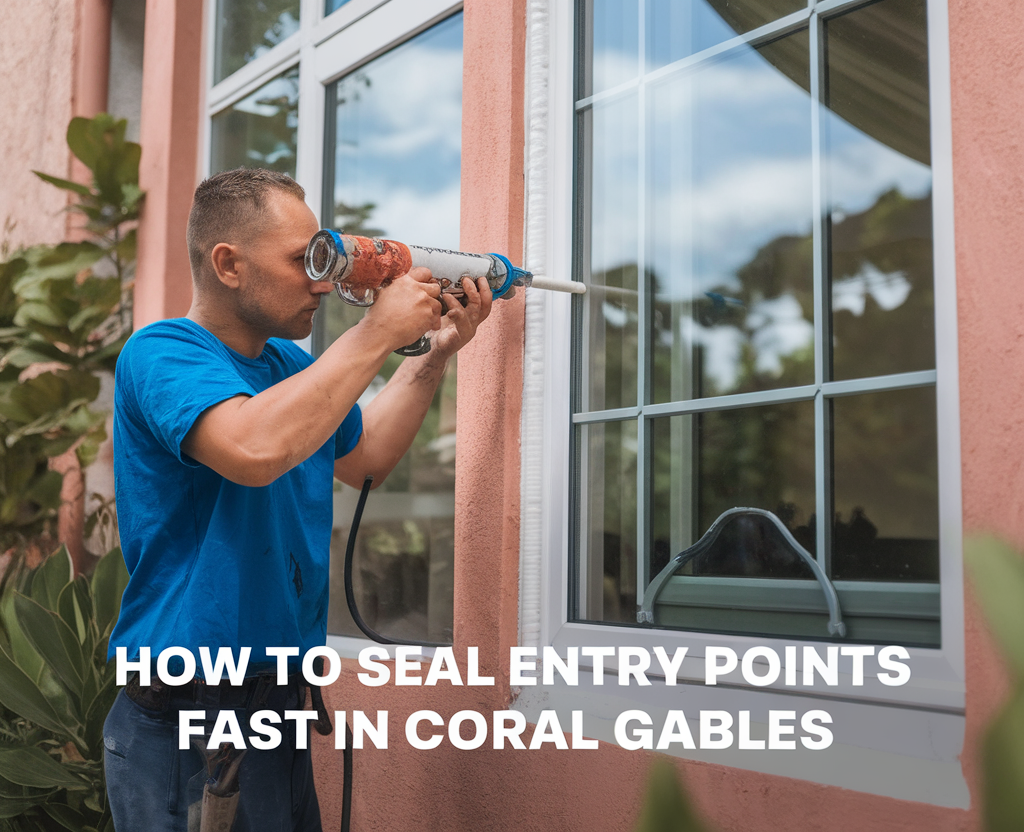
Where window and door frames meet the wall, you’ll often find gaps, especially in older Coral Gables homes that have experienced settling. These gaps need flexible caulk that can handle the expansion and contraction that comes with humidity and temperature changes. Clean out failed old caulk first, then apply a fresh bead of exterior-grade sealant.
The Materials That Actually Work in South Florida
Here’s something I wish every homeowner in The Crossings and Glenvar Heights knew: not all sealants are created equal, and what works great in other parts of the country might fail miserably in South Florida’s climate. Our combination of intense UV exposure, high humidity, dramatic temperature swings between air-conditioned interiors and outdoor heat, and heavy seasonal rainfall puts extreme stress on sealing materials.
When you’re choosing caulk, look for 100% silicone products for exterior applications, especially areas exposed to moisture and direct sunlight. Silicone remains flexible, resists mold growth, and won’t crack or pull away from surfaces. It’s more expensive than basic latex caulk, but it lasts years longer in Florida conditions. For areas you want to paint, choose polyurethane caulk. It’s extremely durable, paintable, and stands up well to our humidity.
Save the latex or acrylic caulk for interior applications where moisture exposure is minimal. It’s easier to work with and clean up, but it simply doesn’t have the longevity outdoors that you need.
Understanding Expanding Foam
Expanding foam is incredibly useful for larger gaps, but it can also cause problems if you use it incorrectly. The key is understanding that this stuff expands a lot, sometimes two or three times its initial volume. If you use too much around a window or door frame, the expansion can actually warp the frame, making it difficult to open or close.
For gaps around windows and doors, use minimal expansion foam specifically designed for these applications. For larger utility penetrations and areas where expansion won’t cause problems, standard expanding foam works great. There are even pest-control foam products that contain additives rodents find unpleasant, though these cost more.
Always wear gloves when working with expanding foam. It’s incredibly sticky, and it doesn’t wash off easily. Have mineral spirits on hand for cleanup. And use less than you think you need. You can always add more, but removing excess dried foam is tedious work.
The Physical Barriers That Make All the Difference
Sometimes caulk and foam aren’t enough. You need actual physical barriers that pests simply cannot penetrate or chew through.
Copper mesh is your best friend for this. It won’t rust like steel wool, and rodents cannot chew through it. Use it to stuff larger openings before sealing with foam or caulk. Hardware stores sell it in rolls or pads specifically for pest control applications.
For screening vents and larger openings, use quarter-inch galvanized hardware cloth instead of regular window screening. It’s much more durable and resistant to damage from both weather and determined pests. When screening weep holes, use purpose-made weep hole screens or vents that maintain the drainage function while blocking entry.
For weather stripping on exterior doors, choose EPDM rubber or silicone varieties. These materials withstand UV exposure and temperature extremes much better than foam or vinyl alone. They cost a bit more but last significantly longer in Florida’s punishing climate.
When It’s Time to Call in the Professionals
Look, I’m all for DIY home maintenance. There’s real satisfaction in identifying and fixing problems yourself. But there are situations where professional help isn’t just recommended, it’s really necessary for your safety and for getting the job done properly.
If your home has complex Mediterranean Revival architectural details, especially if it’s in Coral Gables’ historic district, you might need specialized knowledge to seal entry points without damaging or altering important features. These homes often have requirements about what modifications can be made to preserve their historic character. Professionals who work regularly in Coral Gables understand these considerations.
Two-story homes and houses with steeply pitched or barrel tile roofs present serious safety challenges. Working on a ladder or on a roof in South Florida’s heat isn’t just uncomfortable. It’s genuinely dangerous. Professional pest control technicians have the proper equipment, training, and insurance to safely access and seal upper-level entry points. It’s not worth risking a fall to save a few dollars.
The Hidden Problem Scenario
Here’s a situation that comes up more often than you might expect: you’re sealing entry points, but you already have active pest problems. Maybe you’re hearing rodents in your attic or seeing regular cockroach activity. If you seal entry points without addressing the existing infestation, you might trap pests inside your walls or attic. They’ll die there, creating terrible odors and attracting secondary pests. Or worse, they’ll chew and claw their way out, potentially causing significant damage.
Professional pest control companies coordinate exclusion work with treatment plans. We make sure existing problems are resolved before permanently sealing entry points, preventing these trapped pest scenarios. We also understand pest behavior patterns well enough to know which entry points each species prefers, letting us prioritize effectively.
Sometimes what looks like a simple gap actually indicates more serious underlying issues. That separation between your fascia and soffit might be cosmetic, or it might signal wood rot, termite damage, or structural problems. Experienced technicians can identify when a simple sealing job needs to become a referral to a specialist for more comprehensive repairs.
Keeping Your Defenses Strong All Year Long
Here’s the reality that homeowners in Naranja and Redland need to understand: sealing entry points isn’t a one-and-done task. Florida’s climate is constantly working against you. Materials degrade. Structures settle. Storms cause new damage. Maintaining your pest defenses requires ongoing attention.
Every three months, walk your property’s perimeter and inspect your previous sealing work. You’re checking for caulk that has cracked or pulled away, weather stripping that has worn or torn, new gaps from settling or wood movement, and any damage from landscaping equipment or storm debris. This quarterly check takes maybe thirty minutes but catches small problems before they become major issues.
Pay special attention after significant storms during hurricane season. Heavy rain erodes soil around foundations, potentially exposing new entry points. High winds can dislodge roof components or drive debris into your siding. Even a minor tropical storm can create vulnerabilities that weren’t there before.
The Landscaping Connection
Your beautiful Coral Gables landscaping makes your home gorgeous, but it’s also creating pest pressure right at your doorstep. Dense shrubbery touching exterior walls gives pests protected pathways and hiding spots. Mulch beds against your foundation hold moisture and harbor insects. Irrigation systems create consistently damp conditions that attract pests.
Keep tree branches trimmed back at least six feet from your roofline. Maintain shrubs so they don’t touch your exterior walls. Keep mulch depth at two to three inches and maintain a six-inch gap between mulch and your foundation. Move firewood, building materials, and storage items away from your home’s exterior. These simple landscaping practices dramatically reduce the pest populations probing your defenses.
The Bigger Picture: Benefits Beyond Pest Control
What started as a mission to keep bugs and rodents out delivers benefits that extend throughout your home and your monthly budget. Those same gaps that let pests in are also hemorrhaging your conditioned air. In Coral Gables, where air conditioning runs essentially year-round, that’s real money leaving your house through every crack and gap.
Homeowners throughout South Miami and Pinecrest report energy bill reductions of 10 to 15 percent after comprehensive entry point sealing. Your AC isn’t working as hard to maintain comfortable temperatures because the cool air is staying inside where it belongs. Over a year, that can amount to hundreds of dollars in savings.
Sealed entry points also keep out wind-driven rain and humidity. This prevents mold growth, protects against wood rot, and stops interior moisture damage. In South Florida, moisture control is critical for maintaining your home’s structure and indoor air quality.
When your home’s envelope is tight and pests can’t easily enter, you need fewer pesticide applications. That’s healthier for your family, your pets, and the environment. It also reduces your ongoing pest control costs. Prevention through proper sealing is always more cost-effective than repeatedly treating active infestations.
Finding Your Partner in Home Protection
The most successful approach to pest control combines your vigilance as a homeowner with professional expertise when you need it. When you maintain your home’s entry points and catch vulnerabilities early, professional treatments work more effectively because we’re not fighting constant re-entry from outside.
Many homeowners find that after investing in comprehensive entry point sealing, they can actually reduce their professional pest control frequency while getting better results. The sealed environment allows treatments to maintain effectiveness longer because pest populations can’t immediately replenish from outside sources.
That’s where working with a local pest control company that really knows Coral Gables makes all the difference. We understand the specific challenges that Mediterranean architecture creates. We’ve worked in hundreds of historic homes and know how to seal entry points effectively without compromising architectural integrity. We recognize how local climate patterns affect pest behavior and home vulnerabilities throughout the year.
At Dade Pest Solutions, we don’t just show up and spray pesticides. We help you understand where your home is vulnerable and what you can do to strengthen your defenses. Our comprehensive inspections identify entry points you might never notice on your own because we’re trained to think like pests, understanding exactly where different species attempt entry and why.
We’ve been protecting homes throughout Coral Gables, Pinecrest, South Miami, Palmetto Bay, Kendall, and all across Miami-Dade County for years. We know these neighborhoods, these architectural styles, and the unique pest pressures each area faces. When you call us, you’re not getting a generic treatment plan. You’re getting solutions tailored specifically to your home’s needs, your property’s characteristics, and the pest challenges common to your neighborhood.
Whether you need help identifying vulnerable entry points, want professional sealing for areas you can’t safely access yourself, or need to address an existing pest problem before sealing your home, we’re here to help. We coordinate exclusion work with treatment plans so you get lasting results, not just temporary relief.
Your Coral Gables home is an investment worth protecting. Those beautiful architectural details, that lush landscaping, the comfortable indoor environment you’ve created for your family, they all deserve protection from the pest pressure that comes with living in this gorgeous South Florida community. The combination of aging architecture, mature vegetation, and year-round warm weather means pests will constantly test your defenses. But with proper entry point sealing and the right professional partner, those defenses can remain strong.
Ready to secure your home’s vulnerable points and stop giving pests easy access to your living space? Contact Dade Pest Solutions today for a comprehensive inspection that identifies exactly where your home needs attention. We serve homeowners throughout Coral Gables, Country Walk, Cutler Bay, Glenvar Heights, Homestead, Kendall, Naranja, Palmetto Bay, Pinecrest, Princeton, Redland, Richmond West, Riviera, Silver Palm, South Miami, The Crossings, and all surrounding Miami-Dade County communities. Let’s work together to seal those entry points properly and protect your home from the ground up. Because your family deserves a home that’s truly secure, comfortable, and pest-free.

17 Years of Pest Control Experience Founder and Owner of Dade Pest Solutions Proud Resident of South Florida
Shaun Judy, a dedicated South Florida native, is the founder and driving force behind Dade Pest Solutions. With over 17 years of hands-on experience in the pest control industry, Shaun has built a reputation for reliability, results, and real local knowledge. His journey began with a deep commitment to protecting homes from pests using proven methods and innovative solutions. Raised with a strong work ethic and a passion for service, Shaun treats every property as if it were his own—delivering expert care with a personal touch.