
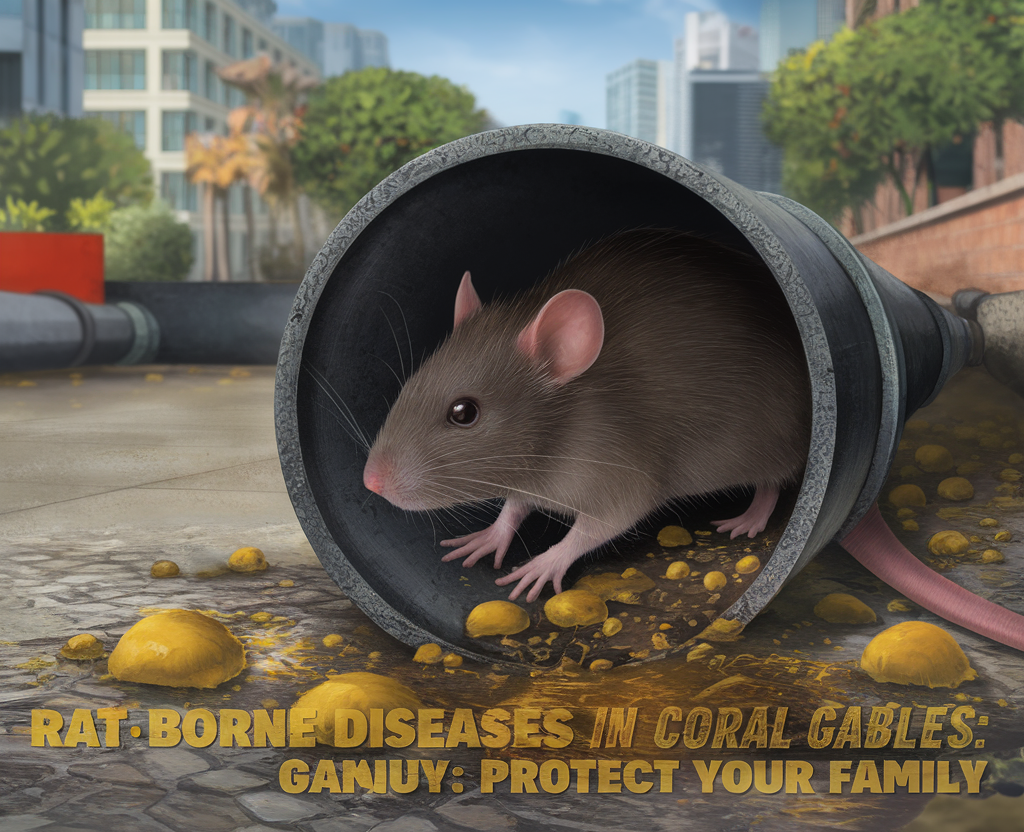
Picture this: You’re reaching for the cereal box in your Coral Gables pantry on a Tuesday morning when something catches your eye. Small, dark pellets scattered along the shelf. Your heart sinks. You know exactly what you’re looking at, even if you don’t want to admit it.
A homeowner on Granada Boulevard had this exact experience last year. She swept up the droppings, wiped down the shelves, and told herself it was probably just a mouse that wandered in. Life got busy. The signs were easy to dismiss. Three weeks later, her eight-year-old daughter spiked a fever that wouldn’t break. When the pediatrician couldn’t pinpoint the cause, they ran more tests. The diagnosis? Leptospirosis, a bacterial infection transmitted through rat urine.
That moment when the doctor explained how her daughter got sick, everything clicked into place. The droppings. The strange scratching sounds in the attic she’d been ignoring. The contaminated surfaces her family had been touching every single day.
If you’re reading this from your beautiful Mediterranean Revival home surrounded by lush tropical gardens and historic banyan trees, you need to know something: the same features that make Coral Gables feel like paradise also create ideal conditions for rats. And these aren’t just property-damaging nuisances. They’re carrying diseases that can seriously harm your family.
Why Your Coral Gables Home Attracts Disease-Carrying Rats
Here’s the thing about Coral Gables that most homeowners don’t realize until they’re dealing with a rat problem: your neighborhood’s greatest assets are also rat magnets. Those stunning clay tile roofs from the 1920s? Perfect hiding spots. The mature mango trees dropping fruit in your backyard? A buffet. The canal system that adds so much charm to evening walks? A highway system for Norway rats.
Miami-Dade County’s subtropical climate means rats don’t take a winter break. They’re active year-round, breeding constantly, and unlike up north where cold weather naturally controls populations, here they just keep multiplying. Every single month.
The roof rat, which loves our tree-heavy environment, is particularly problematic in Coral Gables. These agile climbers travel through tree canopies like aerial highways, jumping from branch to roofline, accessing your attic through gaps you didn’t even know existed. They’re not living under your deck like Norway rats might. They’re above you, in your walls, in your ventilation system.
And they’re leaving behind more than just chewed wires and torn insulation. They’re contaminating your home with pathogens that remain dangerous long after the droppings dry. In fact, that’s when some of these diseases become even more hazardous, as dried rat waste turns into dust particles floating through your vintage ventilation system, circulating into the rooms where your children sleep.
The Diseases Hiding in Your Walls
Let’s talk about what you’re actually dealing with when rats move into your Coral Gables home. This isn’t just about feeling grossed out or worrying about property damage. These are legitimate health threats that send people to the hospital.
Leptospirosis: South Florida’s Silent Threat
If there’s one disease every Coral Gables homeowner should know about, it’s leptospirosis. This bacterial infection spreads through rat urine, and in our wet, humid climate, it thrives. During rainy season, when water pools in your yard and streets flood after afternoon thunderstorms, leptospira bacteria can spread throughout entire neighborhoods.
The symptoms start like a bad flu: high fever, crushing headaches, muscle aches that make it hurt to move. But here’s what makes leptospirosis truly dangerous. If it’s not caught early, it progresses to kidney failure, liver damage, and respiratory distress. The kind of complications that require ICU care.
After heavy rains, when you’re walking through standing water in your garage or hosing down your patio, you could be coming into contact with contaminated water. Your dog playing in puddles in the backyard? Same risk. This isn’t rare or theoretical. It happens right here in Miami-Dade County more often than most people realize.
Hantavirus: The Attic Danger
Imagine finally deciding to tackle that cluttered attic space you’ve been avoiding for months. You pull down the ladder, climb up into the heat, and start moving boxes. Dust swirls in the sunbeams streaming through the roof vents. You’re breathing heavily in the stifling air.
If rats have been nesting up there, you’ve just put yourself at risk for hantavirus. This disease becomes airborne when dried droppings, urine, or nesting materials get disturbed. You don’t need to touch anything. Just breathing the air is enough.
Early symptoms mimic the flu, which is why it’s easy to miss. But hantavirus pulmonary syndrome can progress rapidly to severe respiratory distress. The fatality rate exceeds 35%. Think about that for a moment. More than one in three people who contract this disease don’t survive it.
This is why those “I’ll just clean it up myself” moments can be genuinely dangerous. When homeowners throughout Pinecrest and South Miami discover rat infestations in storage areas they haven’t accessed in years, the right response isn’t grabbing a broom. It’s calling professionals who understand how to safely handle contaminated spaces.
Salmonellosis: Kitchen Counter Contamination
You’re making your family’s dinner on a cutting board. Earlier that day, a rat walked across that same counter while you were at work, leaving behind bacteria from its droppings on its feet. You wiped the counter, sure, but did you disinfect it properly? Would you even know if a rat had been there?
Salmonellosis causes severe gastrointestinal infections. For healthy adults, it means days of miserable symptoms: relentless diarrhea, stomach cramps, fever, vomiting, dehydration. For young children, elderly grandparents living with you, or anyone with a compromised immune system, it can be life-threatening.
In Coral Gables, where multi-generational homes are common and families gather for Sunday dinners, protecting vulnerable family members from rat-transmitted salmonella isn’t just about pest control. It’s about keeping everyone at your table safe.
Rat-Bite Fever: No Bite Required
Despite the name, you don’t need a rat bite to contract rat-bite fever. Handling contaminated materials is enough. So is eating food a rat walked across or drinking from a glass that was sitting on a counter they traveled over.
The bacteria causes sudden fever, chills, vomiting, and joint pain. Left untreated, it leads to heart infections and abscesses in vital organs. The symptoms typically appear within three to ten days of exposure, which means by the time you’re sick, you might not even remember that moment when you reached into the pantry and your hand brushed against something in the dark corner.
Typhus: The Flea Connection
Rats carry more than just diseases in their own bodies. They’re also transportation for fleas, and those fleas transmit murine typhus through their bites or when their feces come into contact with broken skin.
In Coral Gables’ year-round warm climate, fleas don’t die off seasonally. They thrive continuously. Even after you’ve eliminated a rat problem, the fleas they introduced can remain in your home, creating an ongoing disease risk that many homeowners don’t anticipate.
How Rats Silently Contaminate Your Living Spaces
What many homeowners don’t realize is that rats don’t need to directly interact with your family to make everyone sick. They contaminate your entire living environment in ways that are invisible until you know what to look for.
Rats urinate constantly as they travel, leaving microscopic trails along their routes. In your attic, where summer temperatures regularly exceed 100 degrees, that urine dries quickly. The pathogens don’t disappear with the moisture. They become airborne particles. Your HVAC system pulls air from the attic, pushing it through ducts and vents into every room where your family lives. You’re breathing contaminated air without ever seeing a single rat.
A single rat produces between 40 and 50 droppings every single day. Think about that for a second. If you have even a small family of rats living in your walls or attic for a few weeks, you’re looking at thousands of contaminated droppings accumulating in hidden spaces. When you start a renovation project or do seasonal cleaning, disturbing those areas creates immediate health risks.
Then there’s direct food contamination. Rats in Coral Gables homes don’t stay in attics. They venture into kitchens and pantries, seeking food. Their fur carries bacteria and parasites that transfer to every surface they touch. They’re walking on your counters, inside your cabinets, across your stored food containers.
Recognizing the Warning Signs Before Someone Gets Sick
Early detection makes all the difference. The sooner you identify a rat problem, the less exposure your family faces and the easier it is to resolve. But rats are secretive creatures, most active at night when you’re asleep. You need to know what to look for during daylight hours.
Start with droppings. Rat droppings are dark, pellet-shaped, about half an inch long. You’ll find them along walls where rats travel, inside cabinets, in pantries, and in attic spaces. Fresh droppings are moist and dark. Older ones turn gray and crumble when touched. If you’re finding both, you’ve had an ongoing problem.
Look for gnaw marks on wood, plastic, food packaging, even electrical wiring. Rats’ teeth never stop growing, so they gnaw constantly to keep them filed down. Check the corners of doorframes, along baseboards, around utility penetrations where pipes or wires enter your home.
Notice greasy rub marks along walls? Rats follow the same paths repeatedly, and the oils from their fur leave dark smudges along their travel routes. Baseboards and lower walls are common spots.
Pay attention to sounds. Scratching or scurrying in walls or ceilings, especially at night. Squeaking or chattering from attic spaces. Gnawing sounds inside walls. These noises often become background sounds you subconsciously tune out, but they’re telling you exactly what’s happening in the hidden spaces of your home.
For homes with fruit trees, damaged fruit is a telltale sign. Roof rats love citrus and tropical fruits. If you’re finding half-eaten mangoes or oranges in your trees, rats are actively feeding on your property.
Who’s Most at Risk in Your Household?
While rat-borne diseases threaten everyone, certain family members face significantly higher risks. Understanding these vulnerabilities helps you prioritize protection for those who need it most.
Young children are especially vulnerable. They play on floors, explore spaces adults avoid, and touch everything without thinking about contamination. Their developing immune systems can’t fight infections as effectively as healthy adults. When I talk to families in Kendall and Country Walk dealing with rat problems, parents’ first concern is always their children’s safety. And rightfully so.
Elderly family members living with you face serious risks from rat-borne diseases. As we age, immune systems naturally weaken. An infection that causes a week of discomfort for a healthy adult can lead to hospitalization or worse for a senior with underlying health conditions.
Pregnant women need to be especially cautious. Leptospirosis and other rat-borne diseases can cause pregnancy complications, including miscarriage or birth defects. The stress of discovering a rat problem while pregnant is compounded by the legitimate medical concerns.
Anyone undergoing cancer treatment, managing autoimmune conditions, or taking immunosuppressive medications faces amplified risks. Infections that healthy people fight off can become life-threatening for immunocompromised individuals.
Don’t forget about pets. Dogs and cats can contract rat-borne diseases and then transmit them to family members. Your dog investigating a rat in the backyard or your cat catching one in the garage isn’t just doing pest control. They’re potentially exposing themselves and your entire household to dangerous pathogens.
What Makes Coral Gables Different
If you’ve lived here for any length of time, you know Coral Gables isn’t like other suburbs. The City Beautiful has specific characteristics that create unique rat control challenges.
Start with the historic architecture. Those gorgeous Mediterranean Revival homes from the 1920s and 1930s are architectural treasures. They’re also full of original foundation gaps, vintage ventilation systems that provide perfect entry points, and clay tile roofs with accessible spaces between tiles where rats love to nest. Decades of settling have created cracks and gaps in foundations. Tree roots have grown, creating pathways into crawl spaces.
The tropical vegetation that makes Coral Gables so lush is rat paradise. Dense bougainvillea provides cover. Mature mango, avocado, and citrus trees offer abundant food sources. Roof rats travel through tree canopies, moving from property to property without ever touching the ground. That beautiful oak tree whose branches overhang your roof? It’s a bridge straight into your attic.
The canal system and proximity to Biscayne Bay create environments where rat populations thrive. Norway rats particularly love areas near water, burrowing along canal banks and traveling into nearby properties. Every storm that floods streets and yards potentially spreads contamination from these colonies throughout the neighborhood.
The dense, compact nature of Coral Gables means homes are closer together than in sprawling suburbs. Rat populations move easily between properties. When your neighbor finally addresses their infestation, those displaced rats need somewhere to go. Often, it’s your house. Effective long-term rat control in Coral Gables requires neighborhood awareness and sometimes coordinated efforts among adjacent properties.
Taking Action: Protection Starts with Prevention
The good news is that you can significantly reduce your family’s risk through comprehensive prevention strategies. It takes work, but protecting your home is absolutely achievable.
Seal Every Entry Point
Walk around your home’s exterior with a critical eye. Rats can squeeze through gaps the size of a quarter. Anywhere utilities enter your home, check for gaps around pipes, wires, and cables. Examine doors and windows for worn weatherstripping. Look at roof-to-wall junctions for separation. Check foundation cracks and weep holes. Inspect attic vents for damaged screens and chimney openings for adequate caps.
Use appropriate materials for sealing. Steel wool works temporarily but rusts in our humid climate. Copper mesh lasts longer. For larger gaps, use concrete or metal flashing. The goal is creating barriers rats cannot chew through.
Manage Your Landscape Strategically
Tree branches should be trimmed at least six feet away from your roofline. This breaks the aerial highway roof rats use to access your home. Remove low-hanging fruit promptly. Don’t let fallen fruit accumulate under trees. Eliminate dense ground cover near your foundation that provides rat hiding spots.
Coral Gables has strict tree protection ordinances, so you can’t simply remove mature trees. Strategic trimming requires careful planning, but it dramatically reduces roof rat access while keeping your property compliant with city regulations.
Store Food Properly
Transfer pantry items from cardboard boxes and plastic bags into sealed glass or metal containers that rats cannot gnaw through. Never leave pet food out overnight. Clean up fallen fruit from your trees daily. Keep bird feeders away from the house, as spilled seed attracts rats.
Eliminate Water Sources
Fix leaking outdoor faucets. Drain standing water from plant saucers. Ensure gutters direct water away from your foundation. During rainy season, preventing water accumulation becomes especially important.
Maintain Clean Storage Areas
Keep garages, sheds, and storage spaces organized with items elevated off floors. Eliminate clutter that provides nesting materials or hiding spaces. Regular organization also lets you spot evidence of rat activity before infestations become established.
When DIY Isn’t Enough
There comes a point when prevention measures aren’t sufficient, and established infestations require professional intervention. Recognizing that moment can save your family from prolonged exposure to disease risks.
If you’re seeing multiple rats or ongoing activity despite your best DIY efforts, it’s time to call in experts. If you’re finding droppings in living areas or food storage spaces, not just hidden zones, the problem has progressed beyond what homeowner efforts can resolve. Evidence of nesting in attics, walls, or crawl spaces means you’re dealing with breeding populations that will only grow. Structural damage from gnawing indicates an established presence. Unexplained illnesses in family members combined with any signs of rats should trigger immediate professional assessment.
What sets professional pest control apart isn’t just access to commercial products. It’s expertise in roof rat behavior patterns specific to Coral Gables. Experienced technicians know where roof rats nest in tile roofs, how they travel through specific landscape types, and which entry points homeowners consistently miss. They understand how historic home construction creates vulnerabilities that need specialized solutions.
At Dade Pest Solutions, we’ve spent years protecting families throughout Coral Gables, Pinecrest, South Miami, and surrounding Miami-Dade communities. We know that gorgeous 1930s home on Anastasia Avenue has original foundation vents that need custom screening. We understand that the coral rock foundations common in Coral Gables require different sealing approaches than modern concrete foundations. We’ve seen how the mature landscaping in neighborhoods like Riviera creates specific rat travel patterns.
This local knowledge matters because cookie-cutter approaches don’t work in Coral Gables. Your home’s specific architecture, landscape, and location require customized solutions.
What Professional Treatment Looks Like
When you work with experienced pest control professionals, you’re getting a comprehensive approach that addresses current infestations while preventing future problems.
It starts with a thorough inspection. Licensed technicians examine your entire property, from attic to foundation, exterior to interior. They identify active rat populations, locate entry points, assess conducive conditions, and evaluate disease exposure risks. This includes examining specific features of Coral Gables properties like tile roof access points, landscaping vulnerabilities, and vintage home construction details.
Professional-grade exclusion work seals entry points with materials rats cannot breach. This means installing rodent-proof screens on vents, sealing gaps with copper mesh or other appropriate materials, and addressing architectural vulnerabilities common in historic homes. Technicians understand how to maintain your home’s character and comply with preservation guidelines while creating effective barriers.
Population reduction strategies are tailored to your specific situation, considering factors like pets, children, and property layout. Ongoing monitoring ensures complete elimination before transitioning to prevention-focused maintenance.
Professionals also provide sanitation guidance specific to your property. This includes recommendations for managing fruit trees, securing trash storage, and maintaining landscapes in ways that discourage rat activity while respecting Coral Gables ordinances about tree preservation and property aesthetics.
Regular monitoring catches new activity before infestations develop. In Coral Gables, where community-wide rat populations create continuous pressure on individual properties, this proactive approach provides lasting protection.
The Real Cost of Waiting
Beyond immediate health dangers, untreated rat infestations create cascading problems that get worse over time.
Medical expenses add up quickly. Treating rat-borne diseases involves diagnostic testing, antibiotics or antiviral medications, and potentially hospitalization. Severe leptospirosis or hantavirus cases require intensive care with costs reaching tens of thousands of dollars. Even with insurance, deductibles and co-pays create significant financial burden.
Property damage escalates continuously. Rats gnaw constantly, damaging electrical wiring, plumbing, insulation, and structural components. Repair costs often exceed thousands of dollars. Electrical damage poses serious fire risks. Insurance companies typically exclude rodent damage from coverage, leaving homeowners responsible for all repair costs.
Property values take a hit in Coral Gables’ competitive real estate market. Florida disclosure requirements mean documented rat problems must be revealed to potential buyers. Homes with infestation histories sell for less or sit on the market longer.
Secondary pest problems compound original issues. Rats introduce fleas, mites, and ticks that create additional pest control needs and health risks. These parasites often remain even after rat populations are eliminated, requiring separate treatment.
Frequently Asked Questions About Rats and Disease in Coral Gables
How quickly can rats spread diseases to my family?
Disease transmission can happen immediately upon exposure to contaminated surfaces, though symptoms may not appear for days or weeks depending on the specific pathogen. The longer rats are present, the more contamination accumulates and the higher your family’s exposure risk becomes.
Can I get sick from rats even if I never see one?
Absolutely. Most rat-borne disease transmission occurs without direct contact. Breathing air contaminated with dried rat waste, touching surfaces rats have traveled across, or consuming food that’s been in proximity to rat droppings can all cause infection.
Are roof rats more dangerous than Norway rats?
Both species carry similar diseases, but roof rats pose unique risks in Coral Gables because of how and where they live. Their preference for attics and upper spaces means they contaminate areas directly connected to your HVAC system, increasing the likelihood that airborne pathogens circulate through living spaces.
How do I know if my family’s illness is related to rats?
If you have any evidence of rat activity in your home and family members develop unexplained fevers, gastrointestinal symptoms, respiratory issues, or flu-like illness that doesn’t resolve normally, inform your doctor about potential rat exposure. Specific testing can identify rat-borne diseases.
Will removing rats automatically make my home safe?
Eliminating rats is the first step, but contaminated areas require proper cleanup and disinfection. Professional remediation safely removes health hazards that remain after rats are gone. Simply eliminating the population doesn’t eliminate the pathogens they left behind.
How long does professional rat control take?
Timeline depends on infestation severity and property characteristics. Initial population reduction typically takes 2-4 weeks. Complete elimination and exclusion work may require 4-8 weeks. Ongoing monitoring continues indefinitely to prevent new infestations.
Is professional pest control safe for my family and pets?
Reputable pest control companies use methods and products that are safe when properly applied. Technicians assess your household composition and customize approaches accordingly. The health risks from untreated rat infestations far exceed any minimal risks from professional treatment.
Can I just focus on sealing my home without professional help?
If you catch problems early before rats establish residence, diligent exclusion work can prevent infestations. However, once rats are present, they need to be eliminated before exclusion work becomes fully effective. Sealing them inside your walls creates additional problems. Professional assessment determines the right sequence of actions.
Do I need to tell my neighbors about my rat problem?
While not legally required, informing adjacent neighbors is considerate and strategically smart. Rat populations often extend across multiple properties. Coordinated treatment efforts are more effective than isolated actions. When one home eliminates rats, they often relocate to nearby properties. Community awareness improves everyone’s outcomes.
Will rats come back after treatment?
Effective treatment combines elimination with prevention. Once rats are removed and entry points are sealed, new infestations are unlikely unless conditions change. However, Coral Gables’ environment means continuous vigilance is necessary. Regular monitoring catches new problems before they become established infestations.
Points of Interest: Understanding Disease Transmission in Coral Gables Microclimates
Something fascinating happens in Coral Gables that doesn’t occur in many other communities: microclimates created by dense tree canopy and canal systems affect how long disease-causing pathogens remain viable in the environment.
In shaded, humid areas near canals like those in the Gables by the Sea neighborhood, leptospira bacteria can survive in soil and standing water for weeks or even months. During summer rainy season, afternoon thunderstorms flood streets and yards, potentially spreading contamination from established rat colonies along waterways throughout entire neighborhoods. This creates exposure risks far beyond the immediate area where rats are living.
Conversely, in sun-exposed areas with less tree cover, UV radiation helps break down some pathogens more quickly. However, this also means dried rat waste becomes airborne more readily as it’s disturbed by wind or human activity.
The thermal dynamics in Coral Gables attics create another unique consideration. During summer months, attic temperatures can exceed 140 degrees Fahrenheit. While extreme heat kills some pathogens, it also rapidly dries rat urine, creating the dust particles that become airborne and circulate through ventilation systems. Older homes with inadequate attic ventilation and vintage HVAC systems are particularly vulnerable to this contamination pathway.
Understanding these localized environmental factors helps explain why one property might experience more severe disease risks than a similar home just a few blocks away. The specific combination of landscaping, sun exposure, proximity to water, and home construction creates varying risk profiles even within the same neighborhood.
This is part of why local expertise matters so much. Pest control professionals who work specifically in Coral Gables and understand these microclimate effects can provide more accurate risk assessments and more effective solutions than companies using standardized approaches across diverse regions.
Your Family’s Health Is Worth Protecting
The beautiful Mediterranean Revival home where you’re building memories with your family should be a safe haven, not a health risk. Those Sunday dinners on the patio, the sound of kids playing in the yard, quiet evenings reading in your vintage sunroom—these moments are what life in Coral Gables is all about.
Rat-borne diseases threaten to disrupt all of that. But here’s what I want you to understand: you don’t have to live with this worry. Protection is absolutely achievable through awareness, prevention, and professional support when needed.
Recognizing warning signs early makes all the difference. Those small droppings you’re not quite sure about? Investigate. The scratching sounds you hear occasionally at night? Don’t dismiss them. The gnaw marks on your attic insulation? They’re telling you something important.
Implementing comprehensive prevention measures gives you control over your home’s vulnerability. Seal entry points, manage your landscape strategically, store food properly, eliminate water sources, and maintain clean storage areas. These aren’t just pest control tasks. They’re investments in your family’s health and your peace of mind.
And when problems exceed what you can handle alone, reaching out to experienced professionals isn’t admitting defeat. It’s making a smart decision to protect what matters most.
At Dade Pest Solutions, we’ve spent years helping families throughout Coral Gables, Pinecrest, Palmetto Bay, Kendall, South Miami, and all across Miami-Dade County address rat problems before they become health crises. We understand the unique challenges your home faces. We know how roof rats behave in our tree-lined neighborhoods. We’ve seen what happens when historic architecture meets subtropical climate and rat populations. And we’ve developed solutions that work within the constraints and opportunities of living in the City Beautiful.
Every family we work with starts the same way you might be feeling right now: concerned about signs they’re seeing, worried about health risks, unsure whether they’re overreacting or underestimating the problem. Our comprehensive inspections provide clarity. Our customized treatment plans provide solutions. Our ongoing monitoring provides lasting protection.
You don’t have to figure this out alone. You don’t have to worry whether you’re doing enough to keep your family safe. And you definitely don’t have to wait until someone gets sick to take action.
Your home is your sanctuary. Let’s keep it that way. Contact Dade Pest Solutions today for a thorough inspection designed specifically to identify rat activity and disease exposure risks in your Coral Gables home. We’ll walk through your property together, explain exactly what we find, and develop a protection plan tailored to your specific situation. Your family’s health deserves professional protection, and we’re here to provide exactly that.
Because at the end of the day, this isn’t just about eliminating pests. It’s about preserving the life you’ve built in one of South Florida’s most beautiful communities. It’s about protecting the people you love in the place you call home. And that’s something worth doing right.

17 Years of Pest Control Experience Founder and Owner of Dade Pest Solutions Proud Resident of South Florida
Shaun Judy, a dedicated South Florida native, is the founder and driving force behind Dade Pest Solutions. With over 17 years of hands-on experience in the pest control industry, Shaun has built a reputation for reliability, results, and real local knowledge. His journey began with a deep commitment to protecting homes from pests using proven methods and innovative solutions. Raised with a strong work ethic and a passion for service, Shaun treats every property as if it were his own—delivering expert care with a personal touch.