
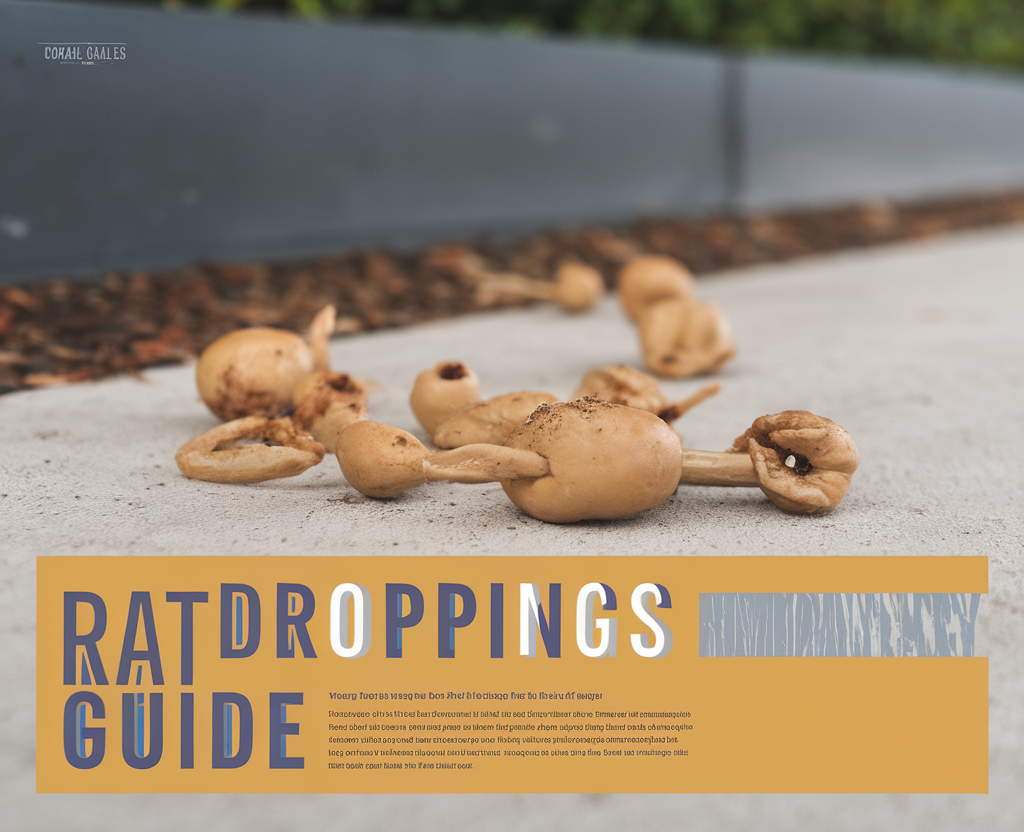
Picture this: It’s a quiet Saturday morning in Coral Gables, and you’re finally tackling that cluttered garage you’ve been meaning to organize. You pull aside a stack of old boxes, and that’s when you see them. Small, dark pellets scattered along the concrete floor near the wall. Your heart sinks. You know exactly what they are, even though part of you wants to believe they’re anything else. Rat droppings. In your home. In your beautiful Coral Gables property where you’ve built your life and raised your family.
That moment of discovery hits different for everyone. Some homeowners feel embarrassed, as if somehow this reflects poorly on their housekeeping. Others feel violated, knowing uninvited guests have been scurrying through their private spaces while they slept. Most feel worried about what those tiny pellets mean for their family’s health and their home’s safety. Whatever you’re feeling right now, know this: discovering rat droppings doesn’t make you a bad homeowner. It makes you a Coral Gables resident dealing with a challenge that’s surprisingly common in our lush, tropical paradise.
Why the City Beautiful Has an Unwanted Rodent Problem
Here’s something most people don’t realize until they’re dealing with a rat problem: Coral Gables’ stunning beauty is exactly what makes it such prime real estate for rodents. Those magnificent banyan trees that create canopied streets? Perfect highways for roof rats. The lush tropical landscaping that makes our neighborhoods feel like botanical gardens? Excellent cover and nesting material. The historic Mediterranean Revival homes with their charming architectural details? Full of tiny gaps and entry points that rats exploit with remarkable skill.
What many homeowners throughout Kendall, Pinecrest, and Coral Gables discover is that our year-round warmth means rats never face the population crashes that happen in colder climates. There’s no winter die-off here. Instead, rats breed continuously, building populations that only grow larger when left unchecked. Add in our proximity to waterways, the fruit-bearing trees in so many yards, and the outdoor dining culture that creates readily available food sources, and you’ve got a perfect storm of conditions that rats absolutely thrive in.
Those droppings you found aren’t just unpleasant evidence of unwelcome houseguests. They’re telling you a story about what’s been happening in your home, often for longer than you’d like to imagine.
What Those Little Pellets Are Really Telling You
Let’s talk about what you’re actually looking at, because understanding rat droppings helps you understand the scope of what you’re dealing with. Rat droppings aren’t uniform. They vary depending on which species has moved into your Coral Gables home, and that distinction matters more than you might think.
Roof Rats: The Aerial Acrobats
If the droppings you found measure about half an inch long with pointed ends and slightly curved shape like dark, miniature bananas, you’re likely dealing with roof rats. These agile climbers are the most common culprits in Coral Gables homes, and they earn their name honestly. They access your property through tree branches touching your roofline, utility lines leading into upper levels, or gaps in your tile roof system. Fresh roof rat droppings look dark brown or black and feel soft to the touch (though you should never touch them without protection, more on that later). Older droppings fade to gray and crumble easily.
When you find these droppings in your attic, along ceiling rafters, in upper cabinets, or near the tops of walls, roof rats have established themselves in the elevated spaces of your home. One homeowner in South Miami described it perfectly: “I thought that rustling sound above my bedroom was just wind in the eaves. Turns out I had an entire rat highway running through my attic insulation.”
Norway Rats: The Ground Dwellers
Norway rat droppings are larger, about three-quarters of an inch long, with blunt ends that make them look like oversized grains of dark rice. These rats prefer ground-level living, so you’ll typically find their droppings in garages, along baseboards, near foundation walls, behind appliances, or in crawl spaces. Norway rats aren’t climbers like their roof rat cousins. Instead, they burrow and nest in ground-level areas, often creating elaborate tunnel systems in landscaping near your home’s foundation.
Both species share one alarming characteristic: they’re incredibly prolific poopers. A single rat produces 40 to 50 droppings every single day. That means if you’re finding hundreds of droppings in your Coral Gables home, you’re not dealing with one rat passing through. You’re looking at evidence of multiple rats who have been living in your space for weeks, possibly months.
The Hidden Health Dangers Nobody Talks About
This is the part of the conversation that gets uncomfortable, but it’s too important to gloss over. Those droppings scattered through your home aren’t just disgusting. They’re dangerous in ways that aren’t immediately obvious.
When rat droppings dry out in our warm Miami-Dade County climate, they become brittle. Disturb them with a broom, vacuum them up with your regular vacuum cleaner, or even just walk through an area with heavy dropping accumulations, and you’re sending microscopic particles into the air you breathe. Those particles can carry hantavirus, which attacks your respiratory system and can be fatal. They can harbor leptospirosis bacteria, which causes severe illness particularly dangerous for anyone with a compromised immune system. They spread salmonella that leads to serious gastrointestinal illness.
Here’s what concerns me most when I talk with homeowners in Homestead, Palmetto Bay, and throughout our service area: the immediate instinct to grab cleaning supplies and tackle the problem yourself. I understand that urge completely. You want those droppings out of your home right now. But improper cleanup creates more danger than leaving them alone temporarily while you arrange for professional remediation.
Parents worry particularly about children playing in areas where rats have been active. Pet owners wonder if their dogs or cats are at risk (they are). People with asthma or allergies find their symptoms suddenly worsening without understanding that rat droppings are triggering their respiratory issues. The stress of knowing rodents have invaded your personal space takes a psychological toll that’s hard to explain to anyone who hasn’t experienced it.
Where to Look and What You’ll Find
Not all dropping locations tell the same story. Understanding where rats leave their calling cards helps you piece together what’s happening inside your walls.
The Kitchen: Command Central for Food-Seeking Rats
If you’re finding droppings behind your refrigerator, under the sink, along the kickplate beneath your cabinets, or in pantry corners, rats have identified your kitchen as their personal buffet. These aren’t random droppings. They mark the trails rats travel repeatedly between their nesting sites and your food storage areas. Fresh droppings appearing daily in the same spots mean rats are actively feeding in your kitchen right now, likely while you sleep.
One Cutler Bay homeowner discovered droppings scattered across her pantry shelves, with clear evidence that rats had chewed through cereal boxes, cracker packages, and even the corner of a bag of flour. “I thought I was being so careful keeping everything sealed,” she told me. “But rats chew through cardboard and plastic like it’s tissue paper. They contaminated dozens of items I had to throw away.”
The Attic: Rat Condominiums Above Your Head
Attics in Coral Gables homes with their insulation, cardboard boxes, seasonal decorations, and relative quiet create perfect nesting conditions for roof rats. Heavy dropping accumulations concentrated in specific areas indicate nesting sites. Droppings scattered along beams and rafters show you the highways rats travel through your attic space. If you’re finding droppings near attic vents or where utility lines enter your home, you’ve found entry points that need immediate attention.
The challenge with attic infestations is that they often go undetected for months. Most homeowners don’t regularly inspect their attics. By the time you notice sounds overhead, spot ceiling stains from rat urine, or finally climb up to investigate, rats have had time to establish substantial populations and leave behind truly staggering amounts of droppings.
Garages and Storage Areas: The Overlooked Entry Points
Garages get opened and closed multiple times daily, creating regular opportunities for rats to slip inside. They offer food sources like pet food, birdseed, or grass seed stored in bags. They’re typically less frequently cleaned than living spaces, allowing dropping accumulations to build unnoticed. Finding droppings in your garage often means rats are using this space as their entry point to access the rest of your home through interior door gaps or utility penetrations in shared walls.
Along the Baseboards: Rat Highways Through Your Home
Rats are creatures of habit who strongly prefer traveling along walls where they feel secure. Dropping trails following your baseboards aren’t random. They map the exact routes rats use to move through your home. These highways connect nesting areas to food sources, and rats travel the same paths repeatedly. Understanding these movement patterns helps pest control professionals determine optimal placement for traps and monitoring stations.
The DIY Cleanup Trap
Every instinct tells you to grab bleach, paper towels, and a vacuum and eliminate those droppings immediately. I need you to resist that urge, at least until you understand what safe cleanup actually involves.
The biggest mistake homeowners make is treating rat droppings like any other mess. You sweep them up, you vacuum them away, you spray some cleaner and call it done. But every one of those actions releases pathogens into the air. Sweeping launches particles that you breathe deeply into your lungs. Vacuuming with a standard household vacuum aerosolizes dried waste and then blows those particles throughout your home via the vacuum exhaust. Even spray cleaning without proper protection exposes you to disease transmission.
If you’ve discovered just a few droppings and you absolutely must address them before professional help arrives, here’s the safest approach. First, ventilate the space completely. Open windows and let fresh air circulate for at least 30 minutes. Never clean in a closed space. Wear rubber gloves, an N95 mask (not a cloth mask or surgical mask, those don’t provide adequate protection), and eye protection. Mix a solution of one part bleach to ten parts water in a spray bottle. Thoroughly saturate the droppings and let the solution soak for at least five minutes. This prevents particles from becoming airborne. Use paper towels to carefully pick up the saturated droppings, seal them in a plastic bag, then seal that bag in a second plastic bag. Clean the affected surface again with the bleach solution. Dispose of everything, including your gloves, in an outdoor trash container. Wash your hands thoroughly with hot water and soap.
That protocol works for small numbers of droppings in accessible locations. But here’s the thing: if you’re finding droppings in multiple locations, if you’re discovering substantial accumulations, if droppings are in your attic insulation, inside wall voids, or in areas you can’t easily access, professional remediation isn’t optional. It’s essential for your safety.
Why Professional Help Makes All the Difference
There’s a point in every rat infestation where the DIY approach stops being practical and starts being dangerous. Recognizing that point could protect your family’s health and save you considerable money in the long run.
Professional pest control services do more than just remove droppings and set traps. When you work with experienced technicians who understand Coral Gables properties, you’re getting a comprehensive approach that addresses every aspect of your rat problem. The inspection process identifies not just where rats are living now, but how they’re accessing your property and what conditions are making your home attractive to them. Species identification determines whether you’re dealing with roof rats, Norway rats, or both, because those species require different control strategies.
At Dade Pest Solutions, we’ve spent years learning the specific challenges that homes throughout Coral Gables, Pinecrest, Kendall, and surrounding Miami-Dade neighborhoods face. We understand how Mediterranean Revival architecture creates entry opportunities. We know that tile roofing systems common in the area require specialized exclusion techniques. We’ve seen how mature tropical landscaping provides rat highways that need to be disrupted. That local knowledge makes a tremendous difference in how quickly and effectively we can eliminate your rat problem.
The exclusion work alone justifies professional involvement. Rats enter Coral Gables homes through openings you’d be amazed they can squeeze through. An adult rat compresses its body and passes through a hole the size of a quarter. Finding every potential entry point requires trained eyes and specialized equipment. Sealing those entry points effectively requires materials and techniques that withstand rat gnawing and Florida’s weather extremes. Copper mesh, metal flashing, concrete patch, and proper installation methods ensure rats can’t simply chew their way back into your home after you’ve eliminated the existing population.
Professional remediation addresses contamination that DIY cleanup misses. Rats don’t just leave droppings on surfaces you can see. They contaminate insulation, leave waste in wall voids, soil areas behind appliances and inside cabinets. Thorough remediation removes contaminated materials, treats affected areas with professional-grade antimicrobial solutions, and ensures your home is actually safe, not just visibly cleaner.
The Prevention Game Plan Every Coral Gables Homeowner Needs
Successfully eliminating an existing rat problem is step one. Preventing future infestations requires understanding what attracted rats to your property in the first place and removing those attractants permanently.
Landscape Modifications That Actually Work
Look at your property through a rat’s eyes. Those tree branches touching your roofline? That’s a welcome sign inviting rats to explore your home’s upper levels. Trim branches back at least six feet from your roof and any structures. Dense hedge rows against your foundation? Perfect cover for rats traveling to and from your home. Create a three-foot clearance zone around your foundation with minimal vegetation. Fallen fruit from mango trees, avocado trees, or ornamental fruit plants? Free restaurant service for rodents. Harvest fruit promptly and collect fallen fruit daily. Thick ground covers, ivy climbing exterior walls, overgrown shrubs? All of these create the protected environments rats love.
I know that’s tough advice for Coral Gables homeowners who take pride in their lush tropical landscaping. You don’t have to eliminate beautiful landscaping. You just need to maintain it in ways that don’t create rat habitat. Strategic trimming, proper spacing, and regular maintenance make your property less attractive to rodents while preserving the aesthetic that makes Coral Gables special.
The Exclusion Work Your Home Needs
Walk around your Coral Gables home and look for gaps. Check where utility lines, pipes, cables, and air conditioning lines enter your home. Inspect areas where different building materials meet, like where brick meets wood siding. Look at your roof line where tile roofing meets walls. Examine door sweeps on all exterior doors, including garage doors. Check attic vents, crawl space vents, and chimney openings. Each of these common locations likely has openings that rats exploit.
Sealing your home effectively requires the right materials and proper installation. Spray foam alone won’t cut it because rats chew through foam like butter. Copper mesh, metal flashing, and concrete provide lasting barriers. For vents that need airflow, quarter-inch hardware cloth blocks rats while maintaining ventilation. Professional exclusion services ensure every vulnerable point gets addressed with appropriate materials properly installed.
Sanitation Practices That Remove Temptation
Rats visit your property looking for three things: food, water, and shelter. Remove those attractants and rats lose interest in your home. Store all pantry foods in sealed glass or metal containers that rats can’t chew through. Don’t leave pet food out overnight. Secure garbage in rodent-proof containers with tight-fitting lids. Rinse recyclables before storage. Clean outdoor grills after use and keep them covered. If you maintain bird feeders, clean up fallen seed daily or remove feeders entirely during rat problems. Maintain compost bins properly with secure lids and appropriate contents, or discontinue composting if rats become an issue.
Fix leaking outdoor faucets and irrigation systems. Ensure proper drainage eliminates standing water around your property. These sanitation practices don’t just help with current rat problems. They prevent future infestations by making your property less desirable than your neighbors’ homes where food and water remain easily accessible.
Understanding Rat Behavior: Know Your Enemy
Rats are remarkably intelligent, adaptable creatures with behaviors that frustrate homeowners who don’t understand what they’re dealing with. That intelligence is part of why rat problems are so challenging and why elimination requires strategic approaches rather than simple solutions.
Rats are intensely neophobic, meaning they fear new things in their environment. Place a trap in a rat’s established pathway, and the rat will avoid that trap for days, sometimes weeks, until it becomes familiar enough to approach. This behavior frustrates homeowners who set traps and wonder why rats aren’t taking the bait immediately. Successful rat control requires patience and understanding of these behavioral patterns.
Rats are primarily nocturnal, conducting most of their activity after dark when your household is asleep. Finding fresh droppings consistently in the same location confirms rats are using that area as an active feeding site or travel route. If you ever spot a rat during daylight hours, that’s a serious red flag indicating large populations where competition forces some individuals to forage during riskier daylight periods.
Rats use droppings as territorial markers, deliberately depositing waste along travel routes to communicate with other rats. Fresh droppings signal active claims to food sources and nesting areas. Understanding this behavior helps explain why droppings concentrate along specific pathways rather than distributing randomly throughout your home.
When to Make the Call: Signs You Can’t Ignore
Some homeowners try managing rat problems themselves for weeks or months before finally calling professionals. I understand the hesitation. Professional pest control feels like an admission that the problem is serious, and it represents an expense you weren’t planning for. But delayed action almost always increases the overall cost and extends the period when your family faces health risks.
Call professional pest control serving Coral Gables when you discover droppings in multiple locations throughout your home. That indicates rats have established territory rather than just exploring. Call when you hear scratching, gnawing, or movement sounds in walls or ceilings during nighttime hours. Those sounds confirm active habitation. Call immediately if you see rats inside your home during daytime hours. Call when you find evidence of gnawing damage on wood, wires, or stored items. Call if you notice grease marks along walls from rats’ oily fur rubbing against surfaces as they travel. Call when you find nests made from shredded insulation, paper, or fabric in attics, storage areas, or behind appliances.
Don’t call just because it’s the smart thing to do. Call because your family deserves to feel safe in your home. Call because the stress of lying awake at night listening to rats scurry through your walls takes a toll you shouldn’t have to bear. Call because your Coral Gables property represents a significant investment that deserves protection from the structural damage rats cause.
The Real Cost of Waiting
Let’s talk honestly about costs because I know that’s a concern weighing on your mind. Professional pest control represents an expense, there’s no getting around that. But compare that expense to what happens when you delay action on a rat infestation.
Rat populations double approximately every 60 days under favorable conditions. The small problem you’re dealing with today becomes a major infestation in just a few months. Those rats chew through electrical wiring, creating genuine fire hazards. They destroy insulation, contaminating it with droppings and urine until it requires complete replacement. They gnaw wooden structural elements, damage stored items, and destroy irreplaceable family possessions. Health risks compound as dropping accumulations increase and pathogen loads build.
Many homeowners throughout Homestead, Country Walk, and Richmond West have told me they wish they’d called sooner. The relief of finally addressing a problem that’s been causing stress and concern outweighs any hesitation about the cost involved. Getting your home back, sleeping peacefully without worrying about rodent sounds, and knowing your family is safe from disease transmission? That has value beyond dollars and cents.
What Professional Treatment Actually Looks Like
If you’ve never worked with professional pest control before, you might wonder what to expect. Understanding the process helps you feel more comfortable taking that step.
Comprehensive inspection comes first. Experienced technicians examine your entire property, inside and out. We’re looking for active dropping locations, entry points, nesting sites, food sources attracting rats, environmental conditions supporting infestations, and species identification. That inspection generates a detailed understanding of your specific situation rather than applying generic solutions.
Treatment plans get customized based on what the inspection reveals. Roof rats and Norway rats require different approaches. Historic Coral Gables homes need different solutions than newer construction. Properties with extensive landscaping need more comprehensive exclusion work than homes with minimal vegetation. Your treatment plan addresses your specific challenges.
Population reduction happens through strategic trap placement based on dropping locations, travel patterns, and feeding sites. We use various trap types depending on the situation, placement locations, and species involved. Monitoring stations help us track activity levels and verify that populations are declining.
Exclusion services seal every entry point we identified during inspection. This critical step prevents new rats from entering after we’ve eliminated existing populations. Without proper exclusion, rat problems recur indefinitely.
Remediation services safely remove droppings, contaminated insulation, nesting materials, and other evidence of infestation. Professional-grade equipment and procedures protect your family from pathogen exposure during cleanup.
Follow-up monitoring ensures complete elimination and verifies that exclusion work is effective. Rat control isn’t a one-time treatment. It’s a process requiring monitoring, adjustment, and verification of success.
Living Rat-Free in Coral Gables: Your Path Forward
Here’s what I want you to understand: discovering rat droppings in your Coral Gables home isn’t a reflection on you as a homeowner. It’s a reality of living in a lush tropical environment where conditions favor rat populations year-round. Historic neighborhoods with mature landscaping, architectural features that create entry opportunities, and abundant food and water sources make Coral Gables attractive to rats regardless of how well you maintain your property.
But you don’t have to live with this problem. You don’t have to lie awake at night listening to scratching sounds. You don’t have to feel anxious every time you open a cabinet or walk into your garage. You don’t have to worry about your children’s health or stress about the damage rats are causing inside your walls. Effective solutions exist, solutions that eliminate existing rats, seal entry points, remove contamination, and prevent future problems.
Homeowners throughout Coral Gables, Pinecrest, Palmetto Bay, Kendall, and across Miami-Dade County have found that partnering with experienced local pest control professionals makes all the difference. We’ve protected homes ranging from historic Mediterranean Revival estates to modern properties, and we understand the specific challenges each presents. We know where rats hide in Coral Gables homes. We know how they’re accessing your property. We know what it takes to eliminate them completely and keep them out permanently.
At Dade Pest Solutions, we’ve built our reputation on delivering comprehensive rat control that actually works. We’re not just treating symptoms. We’re solving the underlying problems that allowed rats to establish themselves in your home. We’re local professionals who live and work in the communities we serve, and we’re invested in keeping our neighbors’ homes safe and secure.
If you’re dealing with rat droppings in your home, if you’re hearing sounds that keep you awake at night, if you’re worried about your family’s health or your property’s safety, reach out to us. Let’s schedule a thorough inspection so we can show you exactly what’s happening, explain your options clearly, and create a customized treatment plan that addresses your specific situation. We serve homeowners throughout Coral Gables, South Miami, Pinecrest, Kendall, Homestead, Cutler Bay, Palmetto Bay, Country Walk, The Crossings, and all surrounding Miami-Dade County communities.
Your Coral Gables home should be a place of comfort and security, not stress and concern. Let’s work together to make that happen. Contact Dade Pest Solutions today and take the first step toward a rat-free home where your family can live safely and peacefully. You deserve that peace of mind, and we’re here to deliver it.
Common Questions Coral Gables Homeowners Ask
How can I tell if rat droppings are fresh or old?
Fresh rat droppings appear dark brown or black with a soft, moist texture. They have a shiny appearance and may feel slightly sticky if touched (though you should never touch them without protection). As droppings age, they dry out, lose moisture, become hard and brittle, and fade to a gray or lighter brown color. In Coral Gables’ humid climate, droppings may retain moisture longer than in dry environments, so appearance alone isn’t always a reliable indicator of timing. If you clean an area thoroughly and droppings reappear within 24 to 48 hours, rats are actively using that space right now.
Can I get sick just from being near rat droppings, or do I have to touch them?
Unfortunately, you don’t need direct contact to face health risks from rat droppings. When droppings dry out and become brittle, they crumble into fine particles that become airborne when disturbed. Simply walking through an area with dried droppings, sweeping, or vacuuming can launch these particles into the air where you breathe them in. Hantavirus specifically spreads through airborne transmission when disturbed droppings release virus particles into the air. Other diseases like leptospirosis can spread through contact with contaminated surfaces that you later touch before eating or touching your face. This is why proper cleanup procedures are so critical and why professional remediation is recommended for significant dropping accumulations.
How long does it take to completely eliminate a rat problem?
The timeline for complete rat elimination varies considerably depending on infestation severity, property size and complexity, species involved, and how quickly exclusion work can be completed. Minor infestations caught early might resolve within two to four weeks. Established infestations in large properties or complex situations can take six to eight weeks or longer for complete elimination and verification. The process isn’t just about killing or removing rats currently in your home. It includes identifying and sealing every entry point, modifying conditions that attracted rats, monitoring to confirm no new activity, and verifying that rats can’t re-enter. Homeowners throughout Coral Gables who commit to the full process and follow professional recommendations typically achieve lasting results, while those who try to rush the process or skip critical steps often face recurring problems.
What’s the difference between roof rats and Norway rats, and does it matter?
The difference matters significantly for effective control. Roof rats are excellent climbers that prefer living in elevated locations like attics, rafters, trees, and upper levels of structures. They’re more common in Coral Gables because they thrive in our tree canopy and access homes through upper-level entry points. Their droppings are smaller, about half an inch long, with pointed ends and a curved shape. Norway rats prefer ground level living and typically nest in burrows, crawl spaces, basements (though rare in Coral Gables), and ground-floor areas. Their droppings are larger, about three-quarters of an inch, with blunt ends. Control strategies differ because you need aerial bait station placement, extensive tree trimming, and upper-level exclusion work for roof rats, while Norway rats require ground-level bait stations, burrow treatment, and foundation-level exclusion. Professional pest control technicians identify species and implement appropriate strategies for maximum effectiveness.
Will rats leave on their own if I remove their food sources?
While removing food sources makes your property less attractive to rats, established infestations rarely resolve simply by eliminating food access. Rats are incredibly adaptable and persistent creatures. If they’ve already nested in your home, they’ve invested considerable effort establishing their territory and will actively defend that territory even when food becomes harder to access. They’ll simply expand their foraging range, find alternative food sources, or even turn to cannibalism in extreme cases. Additionally, rats in Coral Gables have access to numerous food sources beyond what’s in your home, including neighboring properties, outdoor trash, fallen fruit, and natural food sources. Removing food attractants is a critical component of rat control and prevention, but it needs to be combined with population reduction through trapping, exclusion to prevent entry, and ongoing monitoring. Homeowners who simply remove food and hope rats leave typically find the problem persists or worsens.
Are rat droppings dangerous to pets?
Yes, rat droppings pose significant risks to pets, particularly dogs and cats who might investigate droppings with their noses or accidentally ingest contaminated materials. Dogs are susceptible to leptospirosis, which spreads through rat urine and feces and can cause severe kidney and liver damage. Both dogs and cats can contract salmonellosis from contact with contaminated surfaces. Pets with habits of exploring attics, garages, or outdoor areas where rats have been active face elevated exposure risks. Additionally, pets may be exposed to rat poison if you or neighbors use rodenticides, though Dade Pest Solutions uses pet-safe control methods and secure bait stations when rodenticides are necessary. If you suspect your pet has had contact with rat droppings or is showing signs of illness like vomiting, diarrhea, lethargy, or loss of appetite after potential exposure, contact your veterinarian immediately.
How much does professional rat control typically cost?
Rat control costs vary widely based on infestation severity, property size and complexity, extent of exclusion work needed, amount of remediation required, and whether ongoing monitoring is included. Minor infestations in smaller properties with minimal exclusion needs might cost a few hundred dollars. Extensive infestations in large properties requiring comprehensive exclusion work, significant remediation, and extensive treatment can cost several thousand dollars. Most reputable pest control companies, including Dade Pest Solutions, provide free inspections and detailed quotes before beginning work, so you’ll know exactly what to expect. Many homeowners find that investing in comprehensive professional treatment costs less in the long run than repeated DIY attempts that fail to solve the underlying problem. We also work with homeowners to develop treatment plans that fit their budgets while still addressing critical needs effectively.
Can rats come back after professional treatment?
Rats can return if entry points aren’t properly sealed, if attractants like food and water remain accessible, if neighboring properties have rat problems that spread to your property, or if exclusion work is damaged over time. However, comprehensive professional treatment that includes thorough exclusion work and ongoing monitoring dramatically reduces recurrence rates. The key is ensuring that every potential entry point gets sealed properly with materials rats can’t chew through, and that conditions making your property attractive get modified permanently. Properties that receive partial treatment or where homeowners don’t follow prevention recommendations face higher recurrence rates. This is why Dade Pest Solutions emphasizes comprehensive approaches that address root causes, not just immediate symptoms. We also recommend periodic monitoring, especially before hurricane season when rats seek secure shelter, to catch any new activity before it becomes a significant problem. Most homeowners who complete full treatment programs and maintain recommended prevention practices remain rat-free indefinitely.

17 Years of Pest Control Experience Founder and Owner of Dade Pest Solutions Proud Resident of South Florida
Shaun Judy, a dedicated South Florida native, is the founder and driving force behind Dade Pest Solutions. With over 17 years of hands-on experience in the pest control industry, Shaun has built a reputation for reliability, results, and real local knowledge. His journey began with a deep commitment to protecting homes from pests using proven methods and innovative solutions. Raised with a strong work ethic and a passion for service, Shaun treats every property as if it were his own—delivering expert care with a personal touch.