South Florida Termite Risk Is Higher Than Almost Anywhere in the US
Miami-Dade County is consistently ranked among the highest-risk termite areas in the country. The Formosan subterranean termite, which is especially destructive, is well-established throughout the region. Homeowner's insurance does not cover termite damage. Annual inspections are the most cost-effective protection available.
Termites cause an estimated $5 billion in property damage in the United States every year, and a disproportionate share of that damage occurs in South Florida. The warm, humid climate, combined with the presence of multiple aggressive termite species including the Formosan subterranean termite, makes Miami-Dade County one of the most challenging environments for homeowners in the country.
The problem is that termites are rarely visible. They work inside walls, under floors, and within structural beams, often for years before the damage becomes apparent. By the time most homeowners notice a problem, the infestation has already caused significant structural damage. Knowing what to look for is the difference between catching a problem early and facing a five-figure repair bill.
8 Warning Signs of a Termite Infestation
Mud Tubes on Foundation Walls
High PriorityMud tubes are the most reliable indicator of subterranean termite activity. Termites build these pencil-width tunnels from soil, wood particles, and saliva to travel between their underground colony and their food source while staying protected from open air. You will find them on foundation walls, crawl space piers, exterior siding, and even running up interior walls.
What to do:
Do not break the tube and wait. Contact a pest control professional immediately for an inspection.
Termite Swarmers or Discarded Wings
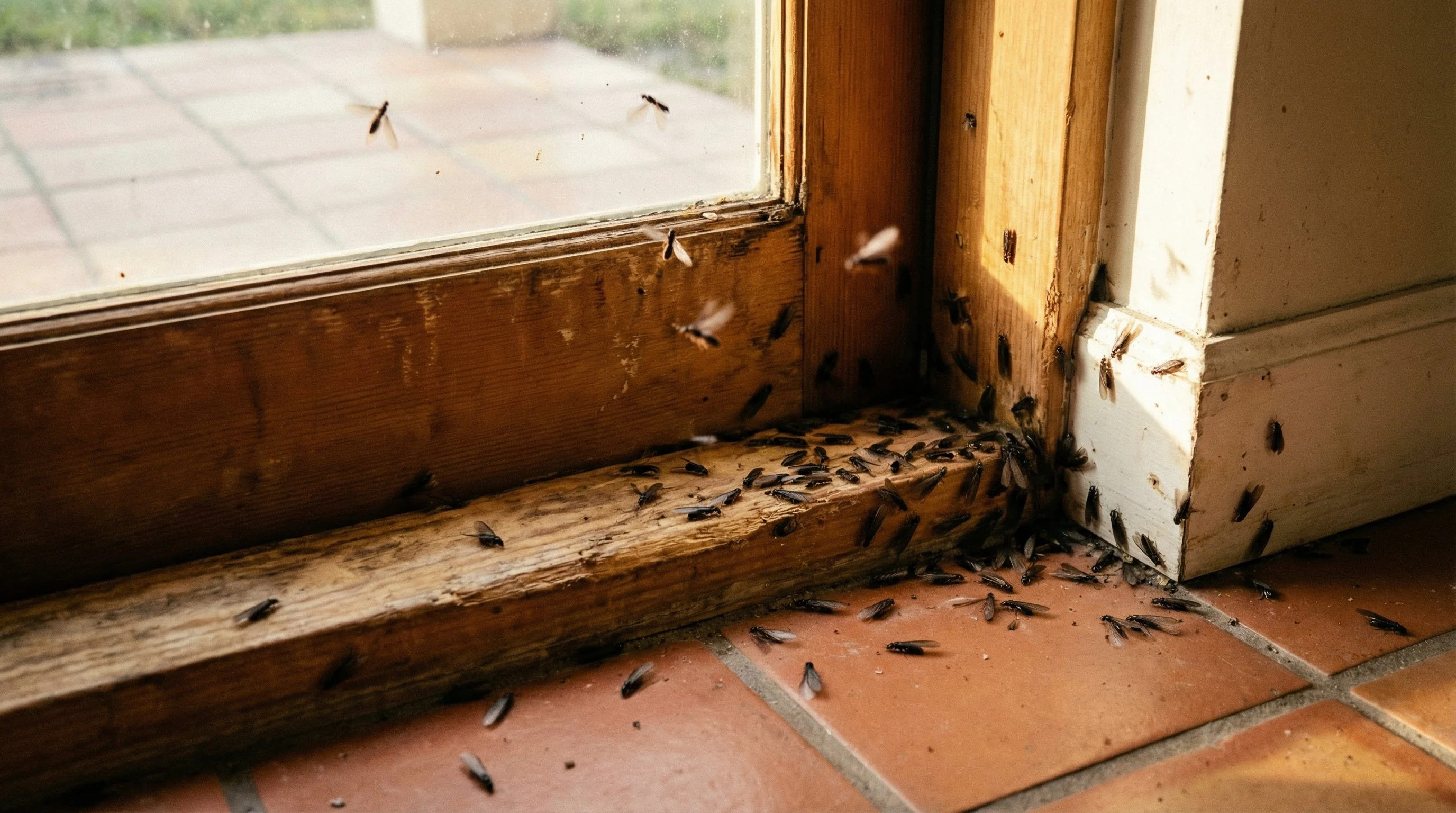
High PriorityTermite swarmers are winged reproductive termites that emerge in large numbers to start new colonies. In South Florida, swarms typically occur in spring and early summer, often triggered by warm temperatures after rain. Swarmers are attracted to light and are frequently found near windows, doors, and light fixtures. Even if you do not see live swarmers, finding piles of discarded wings is a strong sign that a swarm has occurred nearby.
What to do:
Collect a sample if possible and contact a pest control professional. Swarmers near your home do not always mean your home is infested, but it warrants an immediate inspection.
Hollow-Sounding or Damaged Wood
High PriorityTermites eat wood from the inside out, leaving a thin outer shell that can appear normal until it collapses. Tap on baseboards, door frames, window sills, and structural beams. A hollow sound or a papery feel when pressed indicates that termites may have consumed the interior. Blistering or bubbling paint on wood surfaces can also indicate termite activity beneath the surface.
What to do:
Have a professional probe and inspect any hollow-sounding wood. Do not attempt to treat it yourself, as this can disturb the colony and cause it to spread.
Frass (Termite Droppings)
Medium PriorityDrywood termites, which are common in South Florida attics and wood furniture, push their fecal pellets out of small kick-out holes. Frass looks like tiny piles of sawdust or coffee grounds, often found below window sills, door frames, or wooden furniture. Unlike subterranean termite frass, drywood frass is dry and granular.
What to do:
Note the location and contact a pest control professional. Frass indicates an active drywood termite infestation that typically requires fumigation or localized treatment.
Doors and Windows That Stick
Medium PriorityAs termites damage the wood in door and window frames, the structural integrity changes and frames can warp or swell. Doors and windows that suddenly become difficult to open or close, especially in areas that were previously fine, can indicate termite damage to the surrounding wood. This symptom is often mistaken for humidity-related swelling.
What to do:
If sticking occurs alongside any other warning signs on this list, schedule a professional inspection promptly.
Sagging Floors or Ceilings
High PriorityAdvanced termite infestations can compromise the structural integrity of floor joists, ceiling beams, and support posts. Floors that feel spongy or bounce underfoot, or ceilings that appear to sag in localized areas, can indicate significant structural damage. By the time this symptom appears, the infestation has typically been active for years.
What to do:
This is an emergency. Contact a pest control professional and a structural engineer immediately.
Visible Termites in or Around Your Home
High PriorityWorker termites are pale, soft-bodied, and approximately the size of a grain of rice. They avoid light and are rarely seen in the open. If you find termites under mulch, in rotting wood near your foundation, or inside your home, you are seeing a small fraction of a much larger colony. Soldier termites have large heads and mandibles and may be visible when a mud tube or piece of infested wood is disturbed.
What to do:
Do not disturb the area further. Contact a pest control professional for a full inspection.
Termite Activity in Mulch, Stumps, or Wood Debris
Medium PrioritySubterranean termites forage through soil and mulch, and wood debris near your foundation is a primary attractant. Termite activity in a nearby stump, wood pile, or thick mulch layer does not mean your home is infested, but it means the colony is close and your home is at risk. South Florida's warm, moist soil is ideal for large, aggressive subterranean termite colonies.
What to do:
Remove wood debris and mulch from direct contact with your foundation. Have a professional assess the risk and consider a preventive treatment.
Termite Species in South Florida You Need to Know
South Florida is home to multiple termite species, each with different behaviors and treatment requirements. Understanding which species you are dealing with matters because the treatment approach differs significantly.
Formosan Subterranean Termite
Coptotermes formosanus
The most destructive termite species in North America. Colonies can contain several million workers. Common throughout Miami-Dade County. Swarms in late spring, often at night near lights.
Asian Subterranean Termite
Coptotermes gestroi
Similar to Formosan but swarms during the day. Increasingly common in South Florida. Can infest both structures and living trees.
West Indian Drywood Termite
Cryptotermes brevis
Does not require soil contact. Infests attics, furniture, and wood trim. Identified by frass pellets. Often requires fumigation for complete elimination.
How to Reduce Termite Risk Around Your Home
While professional treatment is the only reliable way to eliminate an active infestation, there are steps homeowners can take to reduce the attractiveness of their property to termites:
Frequently Asked Questions
What are the first signs of termites in a South Florida home?
The earliest and most reliable signs are mud tubes on foundation walls, discarded wings near windows or doors after a swarm, and hollow-sounding wood when tapped. In South Florida, termite swarms typically occur in spring and early summer, so finding wings near light fixtures during that period warrants an immediate inspection.
How do I tell the difference between termite damage and water damage?
Termite damage typically shows hollow wood with a honeycombed interior, mud tubes, or frass. Water damage causes wood to swell, discolor, or rot from the outside in. Both can cause similar symptoms like sagging floors or bubbling paint, so a professional inspection is the only reliable way to determine the cause.
Can I treat termites myself in South Florida?
Over-the-counter termite products are not effective against subterranean termite colonies, which can contain millions of individuals spread across a large underground network. DIY treatment can disturb the colony and cause it to spread to new areas of your home. Professional treatment with licensed products and application methods is the only reliable approach.
How quickly can termites damage a South Florida home?
A mature Formosan subterranean termite colony, which is common in Miami-Dade County, can consume approximately one foot of a 2x4 pine board in as little as 25 days. Significant structural damage can occur within 3 to 5 years of an undetected infestation. Annual inspections are the most effective way to catch infestations before they cause major damage.
What is a WDO inspection and do I need one?
A Wood-Destroying Organism (WDO) inspection is a licensed inspection that identifies evidence of termites, wood-boring beetles, and wood-decaying fungi. It is required for most real estate transactions in Florida. Even if you are not selling your home, an annual WDO inspection is one of the best investments a South Florida homeowner can make.
Does homeowner's insurance cover termite damage in Florida?
Standard homeowner's insurance policies in Florida do not cover termite damage. Termite damage is considered a preventable maintenance issue. This makes professional termite prevention and regular inspections especially important, as repair costs can reach tens of thousands of dollars.
Concerned About Termites? Get a Professional Inspection.
Dade Pest Solutions offers WDO inspections and the Termite Risk Mitigation Plan for South Florida homeowners. Same-day service available. Call us today.